

The First Domino: A Wall of Rock and Ice Detaches
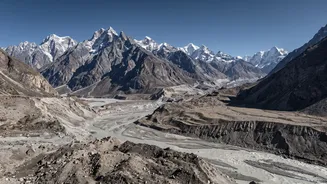
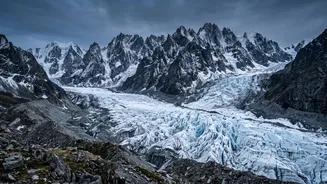
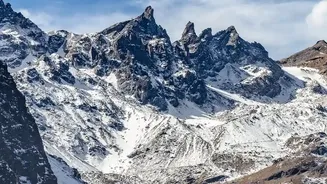
The process begins high in the mountains, often thousands of metres above sea level. A massive section of a mountainside, sometimes a mixture of rock and glacial ice, breaks away. The trigger can be the gradual weakening of slopes due to climate change—as
permafrost that acts like cement thaws—or simply the immense geological pressures in the young, active Himalayan range. In the case of the 2021 Chamoli disaster in Uttarakhand, an estimated 27 million cubic metres of rock and glacier ice collapsed from Ronti Peak. This initial failure is not a slow crumble; it's a sudden, cataclysmic event, releasing an incredible amount of energy as millions of tonnes begin to plummet.
The Transformation: Friction Creates a Monster
As this colossal mass of rock and ice hurtles down the steep mountain face, an extraordinary physical transformation occurs. The immense friction and energy generated by the fall create intense heat, melting the ice within the avalanche almost instantly. Scientists studying the Chamoli event found that the slide fell over three vertical kilometres, releasing enough energy to convert the solid ice into water. This water doesn't just flow away; it mixes with the pulverized rock, soil, and debris from the landslide, creating a dense, fast-moving slurry. This is no longer just an avalanche; it has become a debris flow, a liquid battering ram moving at terrifying speeds.
The Blockage: A River Dammed in an Instant
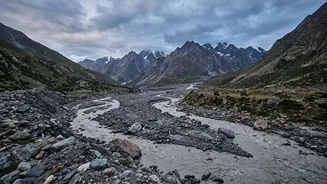
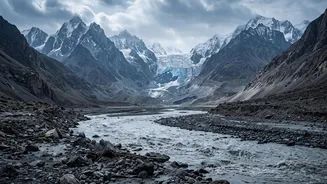
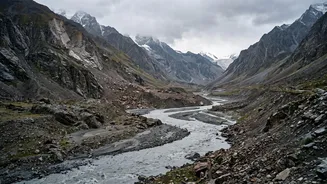
When this high-velocity debris flow thunders into a narrow river valley, it often can’t be contained. The sheer volume and density of the material can block the river's path entirely, forming a temporary, highly unstable dam. Water quickly builds up behind this natural barrier, creating a large lake where none existed moments before. These landslide-dammed lakes are ticking time bombs. The dam itself is just a loose pile of rock and debris with no structural integrity, and the pressure of the rising water behind it builds with each passing minute.
The Outburst: A Catastrophic Release
The final, and most destructive, phase is the failure of this makeshift dam. Whether it is breached by the immense water pressure or simply collapses under its own unstable weight, the dam gives way. This results in what is known as a Glacial Lake Outburst Flood (GLOF) or a Landslide Dam Outburst Flood (LDOF). The entire volume of the newly formed lake is released in a single, devastating surge. This isn't just water; it's a thick, sediment-heavy torrent that picks up more boulders and debris as it scours the valley floor, multiplying its destructive power. During the 2023 Sikkim flood, a landslide into South Lhonak Lake created a wave that breached the moraine dam, releasing 50 million cubic metres of water downstream.
The Human and Environmental Cost
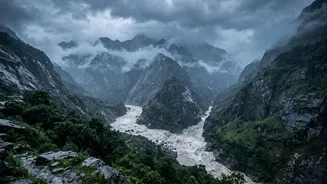
The wall of water and debris moves downstream with unimaginable force, destroying everything in its path. Bridges, roads, villages, and critical infrastructure like hydropower plants are swept away in moments. The 2021 Chamoli flood destroyed two hydropower stations and left over 200 people dead or missing. These events are not just natural disasters; their impact is often amplified by human activity. Building in geologically fragile and hazard-prone zones increases the potential for catastrophic loss of life and economic damage when such events occur.
A Fragile Future in a Warming World
This deadly chain of events is becoming an increasing concern across the Himalayas. Climate change is a significant driver, as rising global temperatures accelerate glacier melt and thaw the permafrost that holds steep slopes together. The Himalayas are warming at a rate significantly faster than the global average, making these mountain ecosystems more unstable. As glaciers retreat, they also leave behind large, unstable lakes that are prone to outburst floods. This creates a future where the risk of such cascading disasters is not just present but growing, posing a grave threat to the millions of people who live in the shadow of these mighty, but vulnerable, mountains.