



The Story We Thought We Knew
The prevailing theory of the Moon’s creation is the Giant-Impact Hypothesis. The story goes that about 4.5 billion years ago, a young, molten Earth was struck by a Mars-sized planet named Theia. The cataclysmic collision flung a massive cloud of debris
into orbit, which eventually coalesced to form our Moon. Scientists believed this explained why the Moon has a small iron core and why its composition seemed similar to Earth's. A key part of this story is the idea that the heat from this impact created a global 'Lunar Magma Ocean'. As this ocean cooled, lighter minerals floated to the top to form the anorthositic crust, while heavier minerals like iron and magnesium sank to form the mantle. This theory, while elegant, has been built on data primarily from the Apollo missions, which all landed in the Moon's equatorial regions.
Enter Chandrayaan-3's Unique Vantage Point
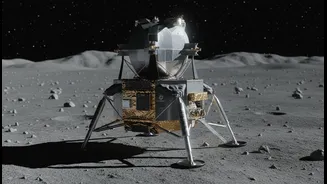
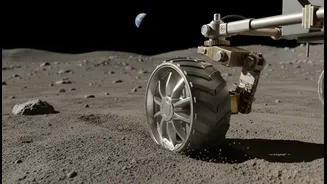
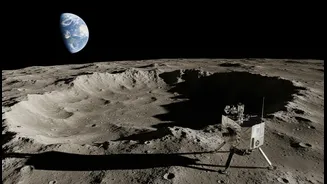
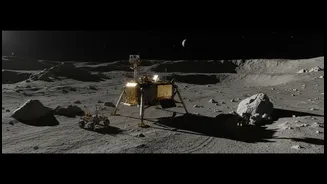
On August 23, 2023, India made history by becoming the first nation to successfully land a spacecraft near the lunar south pole. This wasn't just a symbolic achievement; the location, Shiv Shakti Statio, is scientifically vital. This region is vastly different from the areas explored by previous missions. It's home to some of the oldest and deepest craters in the solar system, like the South Pole-Aitken (SPA) basin, which is over 2,500 km wide. Scientists theorised that the massive impact that created this basin billions of years ago could have excavated material from deep within the Moon's crust and even its mantle, scattering it across the surface. Chandrayaan-3's Pragyan rover, equipped with its Alpha Particle X-ray Spectrometer (APXS), was perfectly positioned to analyse this ancient, churned-up soil for the first time.
A Surprising Mix in the Lunar Dust
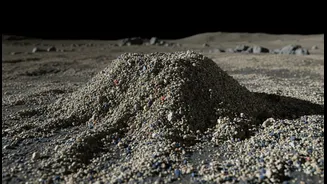
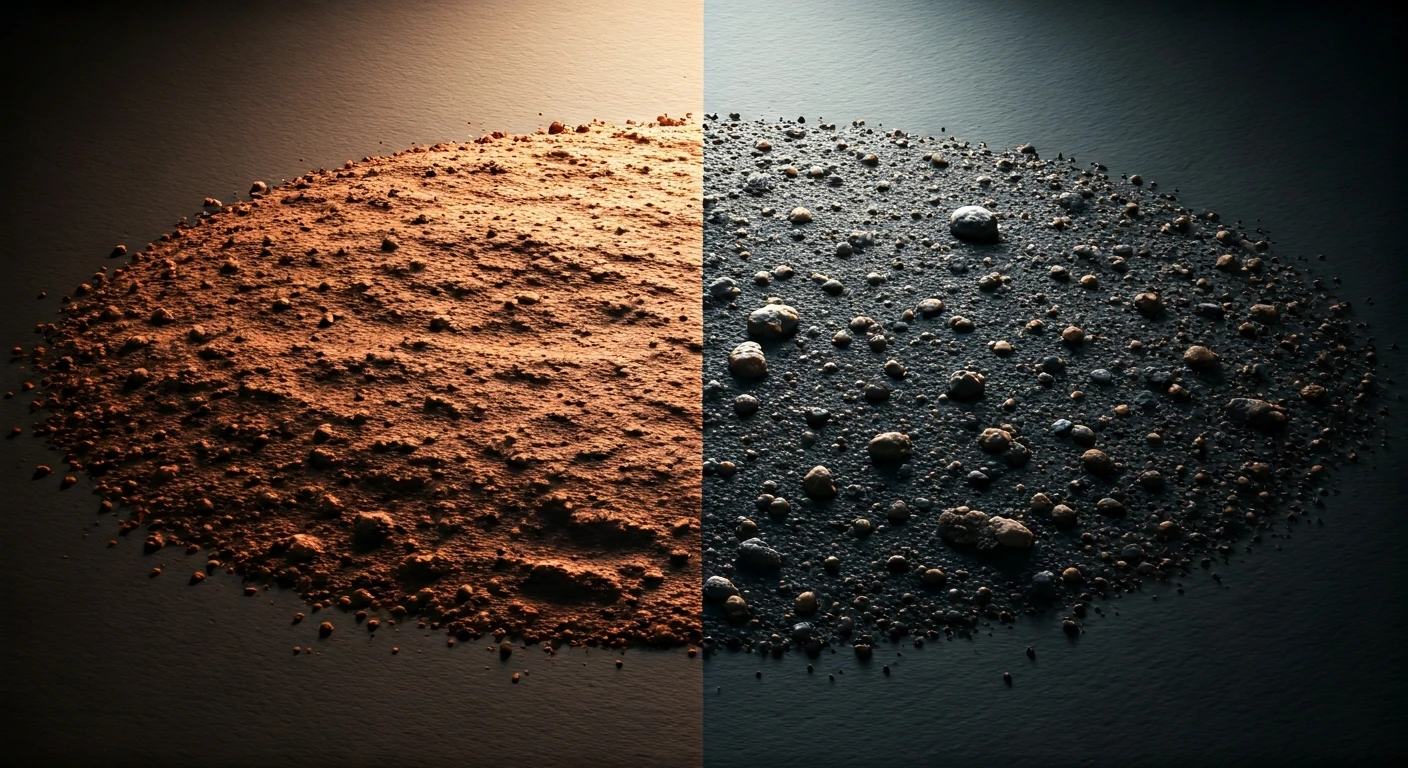
The data sent back by Pragyan was fascinating. The soil at Shiv Shakti Statio had a unique chemical signature. Compared to the Moon's typical highland terrain, it was lower in aluminium but significantly richer in heavier elements like iron and magnesium. This finding supports the theory that the landing site contains a mixture of materials, including not just the upper crust but also fragments of deeper, magnesium-rich rocks. Scientists believe this deeper material was likely blasted from the Moon's lower crust or upper mantle by the ancient SPA basin impact and thrown hundreds of kilometres to its current location. In essence, Chandrayaan-3 didn't just land on the Moon; it landed on a geological treasure trove containing clues about the Moon's hidden interior.
Refining, Not Rewriting
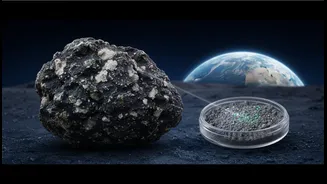
So, does this rewrite lunar origin stories? It's more accurate to say it's adding crucial, high-definition details. The findings largely support and refine the Lunar Magma Ocean hypothesis. By finding a mix of upper and lower crustal material, the mission provides strong evidence that the magma ocean did cool and differentiate into distinct layers, just as the theory predicted. The unexpected twist is just how complex the surface is. The data shows that billions of years of impacts have 'gardened' the lunar surface, mixing these layers together in a way that preserves a complicated geological record. One of the most exciting discoveries was linking the soil's composition to ALHA 81005, the very first lunar meteorite ever identified on Earth, found in Antarctica in 1981. While the meteorite didn't come from Shiv Shakti Statio itself, their near-identical chemical makeup proves that this type of magnesium-rich crust is a distinct feature of the Moon, giving scientists a direct link between a sample in hand and a specific region on the Moon.
India at the Forefront of Lunar Science
Chandrayaan-3 has opened new avenues for understanding how the Moon's ancient crust was formed. By providing the first-ever on-the-ground chemical analysis of the south polar region, ISRO has given global researchers a new, fundamental dataset to work with. The mission's success highlights the value of exploring new lunar regions and demonstrates India's frugal yet highly effective approach to space exploration. The findings about the mixed-up nature of the lunar soil, the discovery of unexpected elements like sulfur, and the detailed thermal properties of the regolith are all vital pieces of the puzzle. These insights are not just academic; they are crucial for planning future missions, including potential habitats or resource utilisation sites. Chandrayaan-3 didn't just plant a flag; it planted the seeds for the next generation of lunar science.