
Why Ditch the Jar?
Many of us reach for a jar of sauce or a bottle of dressing for a quick flavour fix. While convenient, these prepared sauces are often loaded with hidden salt, sugar, unhealthy fats, and preservatives. They can easily turn a healthy home-cooked meal into
something less nutritious. By swapping these out for herbs and spices, you take control of your ingredients, cutting down on calories and sodium without sacrificing taste. In fact, studies have shown that when healthier, lower-sodium meals are enhanced with herbs and spices, people often enjoy them more than the original, less-healthy versions. It's a simple switch that can have a positive impact on your overall health, including reducing risks associated with high blood pressure.
The Aromatic Powerhouse in Your Kitchen
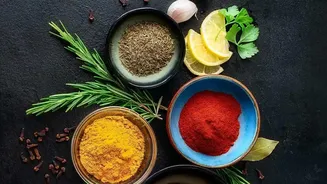
Herbs (the leaves of a plant) and spices (from the root, bark, or seeds) are nature's original flavour enhancers. They do more than just make food taste good; they introduce complex aromas and layers of flavour that a simple sauce cannot replicate. Many also come with significant health benefits, packing a punch of antioxidants that help fight inflammation and cell damage. Spices like turmeric, ginger, and cinnamon are celebrated for their anti-inflammatory properties, while others like garlic and oregano have been noted for their antimicrobial qualities. Using them generously is an easy way to boost the nutritional value of your food.
Fresh vs. Dried: A Quick Guide
Deciding between fresh and dried herbs can be confusing. A good rule of thumb is to use hardy, woody herbs like rosemary and thyme in their dried form for longer cooking processes, as they hold their flavour well. Delicate herbs like basil, parsley, and dill are best added fresh towards the end of cooking to preserve their bright, aromatic qualities. If you need to substitute one for the other, remember that dried herbs are more concentrated. The general conversion is one tablespoon of fresh herbs equals one teaspoon of dried herbs.
Classic Pairings to Get You Started
The key to seasoning with confidence is to learn some classic combinations. For poultry, you can't go wrong with rosemary, sage, and thyme. Fish pairs beautifully with dill, lemon, parsley, and tarragon. When roasting vegetables, toss them with garlic powder, smoked paprika, and black pepper. For Indian-inspired dishes, the trio of cumin, coriander, and turmeric provides a warm, earthy base for almost any curry. And for a classic Italian flavour, basil, oregano, and garlic are your go-to team. Don't be afraid to start simple and build from there.
Technique Matters: Toasting and Blooming
To truly unlock the potential of your spices, you need to know how to treat them right. Toasting whole spices like cumin seeds, coriander seeds, and peppercorns in a dry pan over medium heat for a few minutes releases their essential oils, deepening their flavour and aroma. You'll know they're ready when they become fragrant. Another technique is "blooming," where ground spices are briefly fried in hot oil. This allows the fat to absorb their flavour, which then gets distributed throughout the entire dish. This is the principle behind a tadka or tempering in Indian cooking and is a game-changer for building a flavourful base.