







What Are These Gateway Sites?
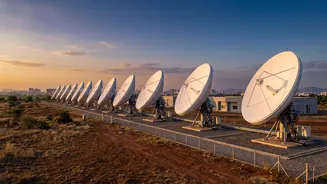
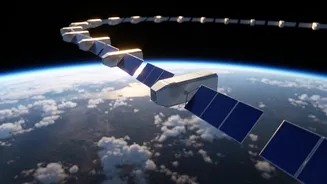
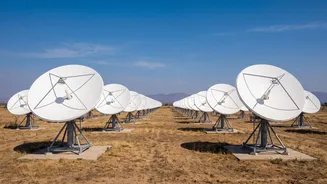
A Starlink gateway, or earth station, is a critical piece of ground infrastructure that connects the orbiting satellites to the global internet. When a user sends a data request from their terminal, it travels up to a satellite, which then beams it down
to the nearest gateway. That gateway is physically connected to high-speed fibre optic cables, acting as a bridge to the terrestrial internet. According to Lauren Dreyer, Starlink's Vice President of Business Operations, the company has now built 20 of these gateway sites, featuring hundreds of antennas, across India. This investment shows Starlink is building a robust, physical network on Indian soil, not just flying satellites overhead.
The Long Road to Launch
Starlink's journey into the Indian market has been a multi-year effort involving complex regulatory navigation. The company's first attempt to accept pre-bookings in 2021 was halted by the Department of Telecommunications (DoT) because it lacked the necessary licenses. Since then, Starlink has methodically secured key permits, including the crucial Global Mobile Personal Communication by Satellite (GMPCS) licence in June 2025 and authorisation from the Indian National Space Promotion and Authorisation Centre (IN-SPACe) in July 2025. Despite this progress and the new ground infrastructure, the service is not yet live. Final security clearances and foreign direct investment (FDI) approvals are still pending.
Designed Specifically for India
A significant hurdle for Starlink has been addressing India's stringent national security and data localisation requirements. Dreyer confirmed at the India Mobile Congress 2026 that the company has built its Indian operations with these rules in mind from the ground up. She stated that Starlink has developed specific security controls to ensure that all data from Indian users remains within the country, a key demand from regulators. This tailored approach is designed to overcome government concerns about data sovereignty, which have been a major sticking point in the approval process.
A New Era of Competition?
Starlink's entry is set to shake up a market dominated by Reliance Jio and Bharti Airtel. However, the relationship is not purely adversarial. In a surprising turn, both Jio and Airtel signed Memorandums of Understanding (MoUs) with Starlink in 2025 to potentially distribute its services. This suggests a strategy where Starlink could complement existing terrestrial networks rather than just compete with them. Starlink's service is aimed squarely at providing last-mile connectivity in rural and remote regions where laying fibre is difficult or economically unviable. While it may not replace affordable 4G and 5G plans in cities, it offers a powerful new option for connecting the unconnected parts of the country.
What Happens Next?
With its ground network ready, Starlink's fate is now in the hands of Indian regulators. The company says it is standing by, ready to launch as soon as the final government clearances are issued. However, the final steps have been contentious. Elon Musk recently alleged on social media that “certain oligarchs” were blocking the company’s entry to protect their market dominance, a claim the Indian government has dismissed. For Indian consumers, particularly those in areas with poor internet, the operational readiness of these 20 gateways is a tangible sign that high-speed satellite internet is closer than ever, but the finish line has not yet been crossed.