


Catch a Faint Meteor Shower
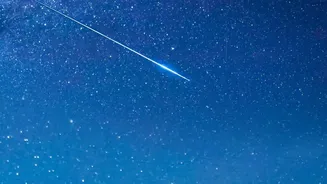
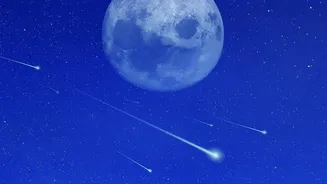
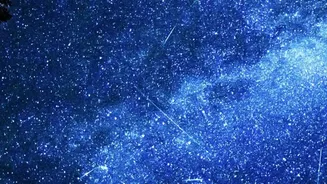
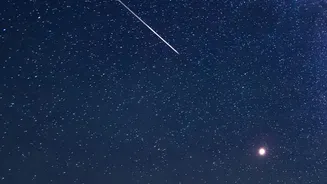
While August has the famous Perseids, September offers its own, quieter encore. The September Epsilon Perseid meteor shower will be active from September 5 to 21, peaking on the night of September 9. This is a minor shower, producing only about five to eight
meteors per hour at its maximum. However, its great advantage this year is that the peak coincides with a nearly new moon, meaning the sky will be exceptionally dark, providing excellent viewing conditions for spotting these shooting stars. For the best chance to see them, find a location far from city lights, let your eyes adjust to the darkness for at least 20 minutes, and look towards the constellation Perseus. The meteors will be fast, so keep your gaze wide.
The Autumnal Equinox Arrives
Marking the official end of summer and the beginning of autumn in the Northern Hemisphere, the autumnal equinox will occur on September 22 or 23, depending on your time zone. In India, this astronomical event takes place early on September 23. An equinox is the moment when the Sun shines directly on the Earth's equator, and day and night are of nearly equal length. While this isn't a visual event you can watch in the night sky, it's a significant marker of the changing seasons. Culturally, it's observed in various traditions, like the Japanese festival of Higan, a time for remembering ancestors. The darker nights that follow the equinox provide even more opportunities for stargazing.
The Harvest Moon Lights Up the Night
The full moon on Saturday, September 26, is known as the Harvest Moon. This is the name given to the full moon that falls closest to the autumnal equinox. It will appear full to the naked eye for about three days, from the night of September 25 through September 27. Traditionally, the bright light of the Harvest Moon provided farmers with extra evening hours to bring in their crops before the advent of electricity. For modern sky-watchers, it offers a beautiful spectacle. Look for it rising in the east around sunset, where it will have a striking golden-orange hue due to the scattering of light in Earth's atmosphere.
A Parade of Planets
September 2026 is an excellent month for planet spotting, with all five naked-eye planets—Mercury, Venus, Mars, Jupiter, and Saturn—visible at various times. Venus will be a brilliant beacon in the western sky shortly after sunset, reaching its peak brightness for the year around September 22. Saturn will be visible for most of the night, rising in the evening. On the night of the full moon, September 26, Saturn will be shining nearby, making for a beautiful pairing. In the pre-dawn hours, you can spot Mars and Jupiter rising in the east. In fact, on the morning of September 8, a thin crescent Moon will pass very close to Jupiter.
Tips for the Best Viewing Experience
To make the most of these celestial events, preparation is key. The single most important factor is finding a dark location away from the glare of city lights. Places like Hanle in Ladakh, Spiti Valley, or the Rann of Kutch are world-class stargazing spots, but even a park or rural area outside your city will make a huge difference. Give your eyes at least 20-30 minutes to fully adapt to the darkness. Avoid looking at your bright phone screen, as it will ruin your night vision. While many events are visible to the naked eye, a pair of binoculars can dramatically enhance the view, revealing the craters of the Moon, the moons of Jupiter, or the faint glow of distant star clusters. Finally, be patient; stargazing is a quiet, rewarding activity that unfolds slowly.