


A Battle Against an Invisible Enemy
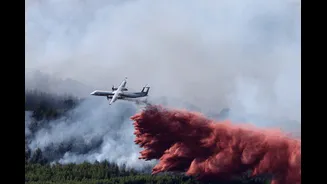
On paper, our ability to combat wildfires has never been stronger. We have satellite detection, fleets of air tankers that can drop thousands of litres of retardant with precision, and real-time data that allows incident commanders to deploy resources
more effectively. These are the hard-won gains from decades of experience and technological innovation. But firefighters on the front lines are increasingly facing an enemy that no amount of technology can easily defeat: the air itself. Record-breaking heatwaves and critically low humidity are creating environmental conditions so extreme that they can render modern firefighting methods less effective, and sometimes, almost useless.
When the Atmosphere Gets Thirsty
To understand why this is happening, we need to look at two key weather elements: temperature and humidity. High temperatures increase the atmosphere's capacity to hold moisture. When combined with low relative humidity, the air becomes incredibly dry. Scientists use a term called Vapor Pressure Deficit (VPD) to measure this atmospheric thirst. Think of it as the difference between how much moisture is in the air versus how much it could potentially hold. During a heatwave, a high VPD means the atmosphere is like a giant sponge, aggressively trying to suck moisture out of everything it touches—trees, grasses, soil, and even wooden structures. This process turns entire landscapes into a tinderbox, primed to ignite.
Fuel on a Hair Trigger
This atmospheric drying has a profound effect on what firefighters call 'fuels'—the vegetation that a wildfire consumes. When relative humidity plummets, fine fuels like grass and pine needles can dry out and become highly flammable in a matter of hours. This means a stray spark from a vehicle or a lightning strike that might have fizzled out in milder conditions can instead erupt into a major blaze. The fires start more easily, spread faster, and burn with greater intensity. In recent years, human-caused climate change has been identified as a primary driver of the increased aridity that makes fuels so receptive to fire.
How Extreme Weather Hampers the Fight
These same conditions directly undermine the tools firefighters rely on. Water and fire retardant dropped from aircraft can evaporate before even reaching the ground. The intense heat from the fire creates powerful updrafts, making it dangerous for low-flying aircraft to operate. High winds, often accompanying these weather patterns, can carry embers far ahead of the main fire, creating spot fires that breach containment lines. In the most extreme cases, massive wildfires can generate their own weather systems, including pyrocumulonimbus clouds—or fire clouds—that can produce lightning and unpredictable wind shifts, making the blaze even more erratic and dangerous for crews on the ground. The heat also makes it difficult for firefighters to get a break; fires that used to calm down overnight when humidity recovered now often burn actively through the night.
An Escalating Arms Race
The result is a dangerous feedback loop. Climate change contributes to more frequent and intense heatwaves and droughts. This creates prime fire conditions that overwhelm even the most advanced firefighting resources. Fires become larger, more destructive, and last longer, releasing huge amounts of carbon that further contribute to a warming planet. Recent devastating fires across Europe and North America have been directly linked to these patterns, with scientists concluding that climate change made the extreme fire weather significantly more likely. While some experts are exploring new technologies and better forest management practices, the consensus is growing that firefighting strategy must now fully integrate climate science.