






A Special Delivery from Space
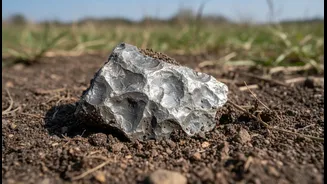
In July 2024, a meteorite streaked across the sky and landed in Hillsborough, New Jersey. Unlike many space rocks that endure years of weathering on Earth before being found, this one was recovered almost immediately. This rapid recovery was a huge win
for science, as it preserved the meteorite in a remarkably pristine state, almost exactly as it was in space. This meteorite, named Hillsborough, is a type known as a CM carbonaceous chondrite—a primitive rock containing some of the oldest materials in our solar system, dating back more than 4.5 billion years. Its quick collection meant that delicate minerals and organic compounds, which would normally be destroyed by moisture and contamination, were saved for analysis.
Uncovering the Salty Secret
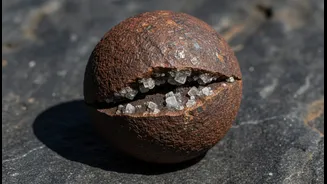
When scientists began examining the Hillsborough meteorite, they found something unexpected for its type: unusually high concentrations of sodium. This surprising signal prompted a much closer look. Using powerful electron microscopes, they peered deep inside the rock, examining its structure from the millimeter scale all the way down to individual atoms. What they discovered was extraordinary. The analysis revealed microscopic fractures within the rock that were filled with sodium-rich material. This wasn't just ordinary salt; it was the mineral residue left behind when salty water, or brine, evaporated long ago on the meteorite's parent asteroid.
A Glimpse of a Watery World
The discovery of these ancient brines paints a vivid new picture of the asteroid from which the Hillsborough meteorite originated. It suggests a small, primitive world that was far from dry. Scientists believe that liquid water, rich in dissolved salts, once flowed through fractures in the rock. This activity likely happened near the asteroid's surface, where water could evaporate due to the vacuum of space, leaving the concentrated salt deposits behind. This marks the first time such clear evidence for brines has been found in this common class of meteorite, offering a new window into the chemical processes that shaped these ancient bodies.
Connecting the Asteroid Dots
This finding is particularly exciting because it connects to other recent discoveries. Similar sodium-rich salts were found in pristine samples returned directly from the asteroids Bennu and Ryugu by NASA and JAXA missions. However, those asteroids were a different type. Finding the same kind of brine evidence in the more common CM-type Hillsborough meteorite suggests that these watery, salty environments were much more widespread among the asteroids of the early solar system than scientists had previously realised. It seems that these small worlds, busily forming billions of years ago, were home to surprisingly active water chemistry.
The Ingredients for Life
The story doesn't end with salt and water. The Hillsborough meteorite was also found to be packed with a diverse suite of organic compounds, including amino acids—the essential building blocks of proteins. The presence of brines is a key piece of this puzzle. These salty liquid environments could have acted as perfect chemical reactors, creating and concentrating the complex molecules necessary for life to begin. This discovery strongly supports the long-held theory that asteroids and meteorites like this one could have delivered not only water but also a rich inventory of prebiotic organic ingredients to the early Earth, potentially kick-starting the process that led to life.