




A Window to the Bronze Age
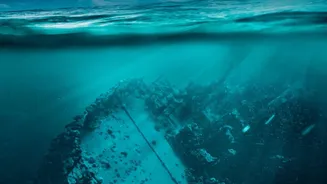
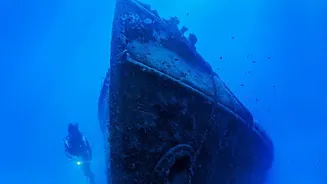
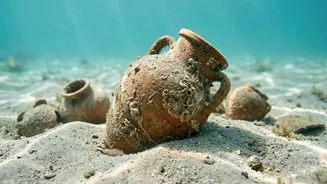
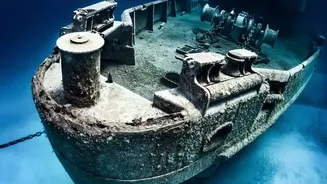
Off the coast of Kekova Island in Turkey, archaeologists have been studying what may be the world's oldest known shipwreck. While the vessel's wooden hull has long since been consumed by the sea, its cargo remains, scattered across the seafloor. Led by Hakan
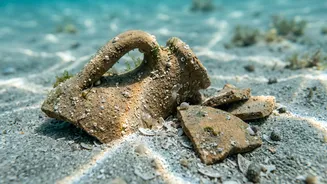
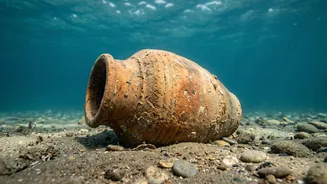
Öniz of Akdeniz University, a team has recovered over 30 ceramic storage vessels, known as amphorae, and three large stone anchors. By studying the shape and style of the pottery, experts have dated the wreck to the Early Bronze Age, between 4,400 and 4,700 years ago—a time when the great pyramids of Egypt were being constructed across the sea. This discovery provides rare physical proof of the extensive maritime trade routes that connected ancient civilisations long before the Greeks and Romans dominated the Mediterranean.
More Than Just Pottery
Among the dozens of amphorae, one jar in particular has captured the attention of researchers. This unique vessel has two small holes and is decorated with nine distinct markings. Its unusual design has led to a fascinating hypothesis: that it might have been a churn used to process milk into butter or cheese. While other jars on the wreck likely carried commercial goods like olive oil, wine, or tree resin, this special pot suggests a more personal, everyday activity taking place on board. The idea is provisional, but it opens a window not just into what these ancient mariners traded, but how they lived during their long journeys.
The Life of a Bronze Age Sailor
The theory of onboard dairy processing raises an intriguing possibility: that the sailors may have kept live animals, such as goats, on their roughly 10-metre-long ship. This would have provided a fresh source of milk, which could then be churned into more stable, storable products like cheese. Such a practice would have been an ingenious solution for securing nutritious food during voyages that could last for weeks or months. It paints a vivid picture of resourcefulness and suggests a level of sophistication in food preservation and animal husbandry that is remarkable for the period. Rather than just being transporters of goods, these sailors were skilled survivors, creating a small, self-sustaining ecosystem on the open water.
Unlocking Ancient Recipes
To confirm the jar's purpose, scientists will rely on advanced techniques like lipid residue analysis. This process involves examining the fats, oils, and waxes absorbed into the porous clay of the pottery over millennia. By analysing the molecular and isotopic signatures of these residues, researchers can distinguish between different types of animal fats—such as those from meat versus milk—and plant oils. Archaeologist Karin Sowada of Macquarie University was astonished by the amount of residue preserved inside some of the recovered vessels. The analysis of these glossy residues, which is still ongoing, could definitively prove whether this unique jar was indeed used for dairy, providing a direct link to a 4,700-year-old recipe.
A Global Trade Network
Regardless of the 'cheese jar's' final analysis, the shipwreck itself has already reshaped our understanding of the Bronze Age. Clay analysis suggests many of the amphorae were made in workshops in the Jordan Valley. Similar vessels have been found as far afield as Egypt, Crete, and the site of ancient Troy. This indicates a thriving and complex trade network connecting the eastern Mediterranean. The ship may have been sailing from the Levant (modern-day Syria, Lebanon, and Israel) towards the Aegean Sea when it met its end. This single wreck provides concrete evidence of a connected world, where goods, ideas, and people travelled vast distances by sea nearly five millennia ago.