




Our Galaxy’s Sleeping Giant
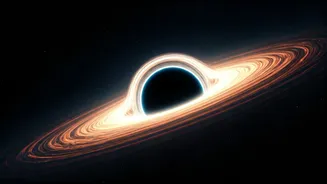
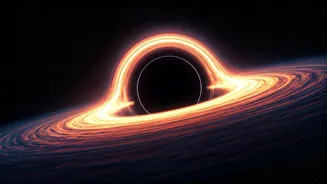
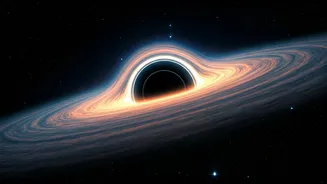
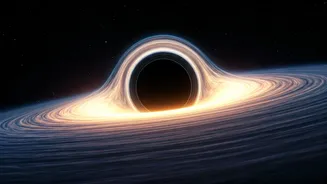
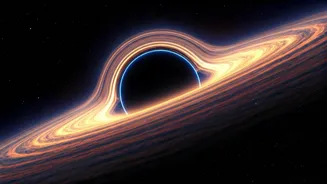
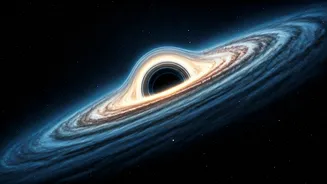
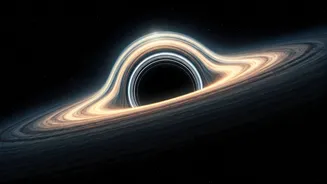
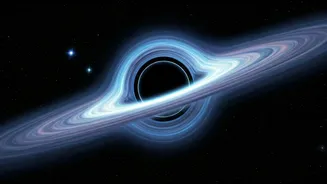
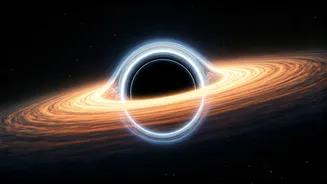
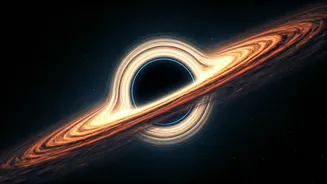
For decades, astronomers have studied Sagittarius A (Sgr A), the supermassive black hole located about 27,000 light-years from Earth. With a mass over four million times that of our sun, it’s the gravitational anchor of our galaxy. Compared to the violent,
brightly lit black holes at the centers of other galaxies—known as active galactic nuclei (AGN)—ours has always seemed remarkably placid. Its diet is famously meager; scientists have joked it's equivalent to a human eating a single grain of rice over a million years. This low level of consumption means it doesn't typically produce the massive, continuous fireworks seen elsewhere in the cosmos.
Flickers in the Dark
While Sgr A is generally quiet, it isn't completely dormant. Scientists have long observed occasional 'flares,' which are brief, powerful bursts of radiation caused by superheated gas and magnetic interactions near the black hole's edge. One recent study using the James Webb Space Telescope revealed a constant, bubbling stream of these flares, from faint flickers to blinding daily eruptions, suggesting a more dynamic environment than previously thought. These observations indicate that even in its quiet state, the area around Sgr A is a chaotic place, with magnetic fields colliding and releasing massive amounts of energy.
A More Violent Past
The latest evidence points to not just present-day flickers but a much more explosive history. A recent study using the XRISM space telescope found compelling signs of a massive outburst that occurred just a few hundred to a thousand years ago. By studying giant molecular clouds near the galactic center, astronomers detected a 'light echo'—a reflection of a powerful X-ray flare from Sgr A's past. This evidence suggests that our black hole was once thousands of times brighter, indicating it consumed a large object like a star or gas cloud relatively recently in cosmic terms. This discovery challenges the long-held image of Sgr A as a consistently gentle giant.
The Discovery of a Galactic Wind
Adding another layer to this new picture of activity, astronomers recently announced the first clear evidence of a 'black hole wind' blowing from Sgr A. After a 50-year search, observations from the ALMA telescope array revealed a massive, cone-shaped cavity in the cold gas surrounding the black hole. This void is the unmistakable imprint of a powerful outflow of hot material being pushed away from Sgr A. While this wind is weaker than those seen in more active galaxies, its discovery confirms a fundamental theory of black hole physics: even a quiet, underfed black hole must have an impact on its surroundings. Scientists estimate this wind has been active for at least 20,000 years.
What It Means for Our Galaxy
These converging lines of evidence—more frequent flares, a violent recent past, and a persistent wind—are forcing a rewrite of our understanding of the Milky Way's core. It is not a static, sleeping region but a dynamic environment that fluctuates between quiet periods and active phases. This activity influences the evolution of the galactic center, shaping star formation and the distribution of gas and dust. Studying these active phases, even the faint ones, provides a unique window into how the vast majority of black holes across the universe, which are also in a quiet state, live their lives.