





A Simpler Story of the Moon
For decades, scientists have worked with a powerful theory called the Lunar Magma Ocean (LMO) hypothesis. The idea is that billions of years ago, the Moon was a hot, molten ball of rock. As this massive magma ocean cooled, heavier minerals like iron and
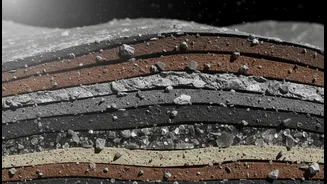
magnesium sank to form the Moon’s mantle, while lighter minerals floated to the top. This process created a relatively uniform, light-coloured crust made mostly of a rock called anorthosite. Missions like Apollo and Luna, which landed closer to the Moon’s equator, brought back samples that largely supported this idea of a straightforward, layered crust. This was the accepted story of how the Moon got its face.
Pragyan Rover's Deeper Look
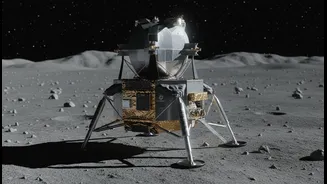
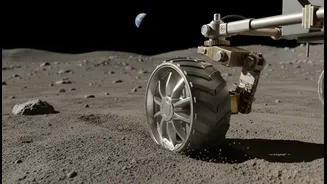
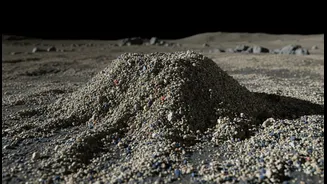
Enter Chandrayaan-3 and its diligent rover, Pragyan. Exploring the untouched south polar region, Pragyan used its Alpha Particle X-ray Spectrometer (APXS) instrument to analyze the chemical makeup of the lunar soil at its landing site, Shiv Shakti Statio. The APXS works by bombarding the surface with particles and reading the unique X-ray signatures that the elements in the soil emit. This allows for an on-the-spot analysis of what the ground is made of, providing the first-ever ground-truth data from this high-latitude region. Scientists from the Physical Research Laboratory (PRL) in Ahmedabad then began the detailed work of interpreting this fresh stream of data.
A Complex Cocktail of Rocks
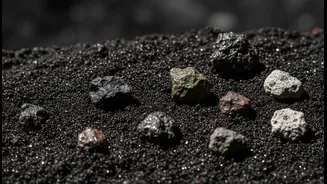
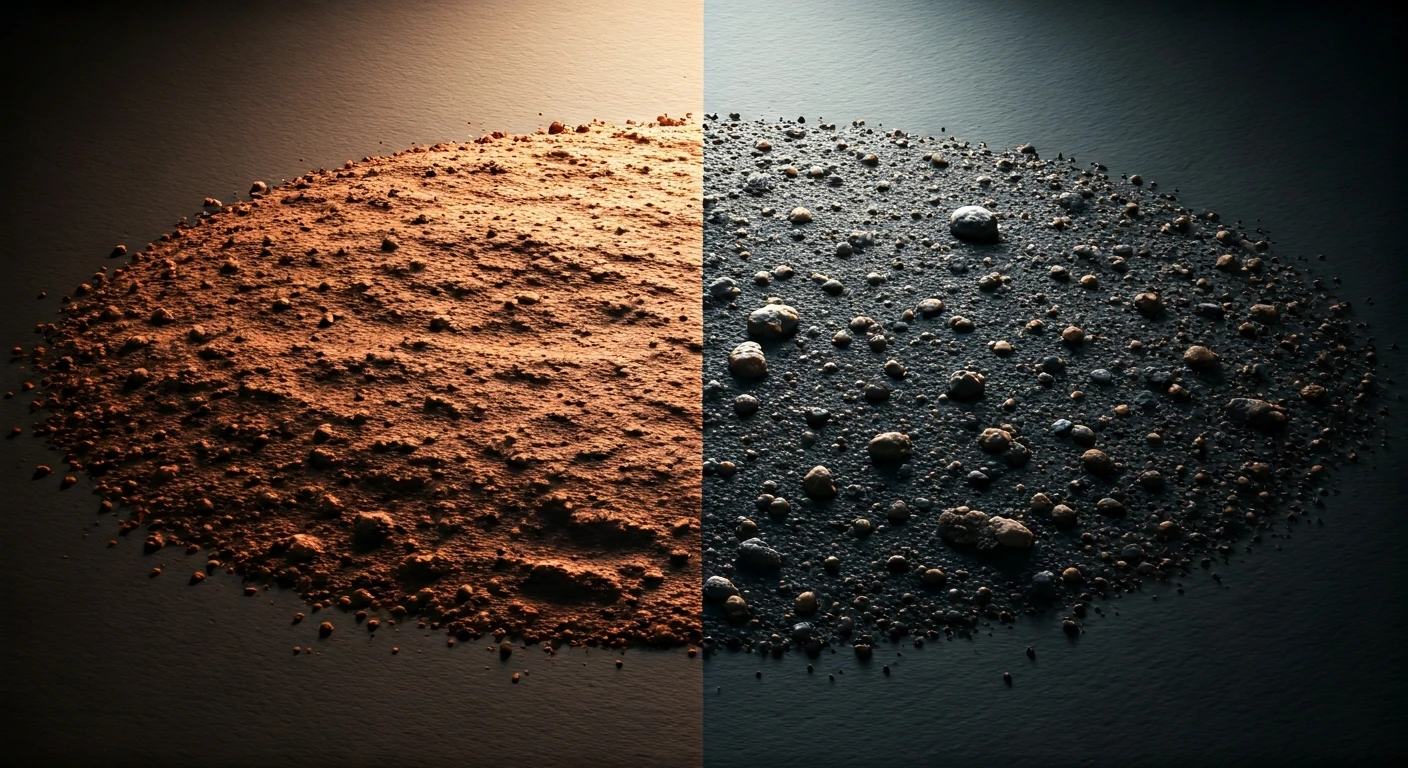
The Pragyan rover’s findings have thrown a fascinating twist into the old story. Instead of finding only the expected anorthosite, the APXS data revealed a more complex mixture. The soil at Shiv Shakti Statio has lower levels of aluminium but is richer in iron and magnesium than typical highland regions. This suggests the surface isn't just made of the light, floaty stuff from the upper crust. It appears to be a blend, containing fragments of magnesium-rich rocks that likely came from deeper within the Moon's layers. The soil is a mix of two main rock types: the expected ferroan anorthosites (FAN) and the magnesium-rich rocks known as the Mg-suite.
The Impact of a Giant Crater
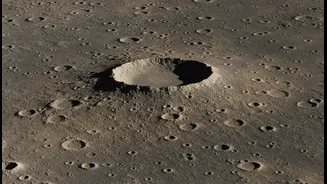
So, how did this deeper material get to the surface? Scientists believe the answer lies in a colossal, ancient event. The Chandrayaan-3 landing site is about 350 km away from the South Pole-Aitken basin, one of the largest and oldest impact craters in the entire solar system. It's theorised that the massive asteroid impact that created this basin billions of years ago was powerful enough to excavate material from deep within the Moon's crust and mantle. This deeper, magnesium-rich rock was then blasted across the lunar surface, eventually mixing into the soil at the location where Pragyan is now exploring. This 'gardening' process, caused by countless impacts over eons, has created a much more complicated geological record than previously understood.
A Surprising Earthly Connection
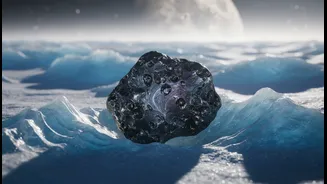
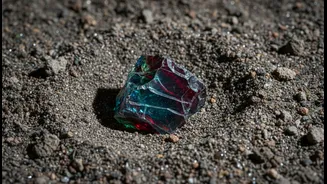
In another stunning discovery, analysis showed that the composition of the soil at Shiv Shakti Statio is a near-perfect geochemical match to a specific meteorite found on Earth. The meteorite, named ALHA 81005, was discovered in Antarctica in the early 1980s and was the very first rock to be identified as having come from the Moon. While this doesn't mean the meteorite came from that exact spot, it proves that both the landing site and the meteorite represent a similar and rare type of magnesium-rich lunar crust. This link provides a powerful new tool, connecting lunar samples on Earth to specific geological contexts on the Moon, opening new doors for understanding our celestial neighbour.