






The Science Behind Peppermint's Cooling Effect
Peppermint's power against headache discomfort lies in its main active ingredient: menthol. When applied to the skin, menthol activates specific cold-sensitive receptors (known as TRPM8 receptors). This sends a cooling sensation to your brain that can
compete with and distract from pain signals. Some research suggests this cooling effect helps relax tense muscles and may improve blood flow to the area, which are common factors in tension headaches. Limited but promising studies on topical peppermint oil—which is far more concentrated than tea—have shown it can be effective for tension headaches, with some research comparing its effects to common pain relievers. While a tea compress is much milder, the same principles are at play, offering a gentle, soothing experience.
Tea Compress vs. Essential Oil
It's crucial to understand the difference between a peppermint tea compress and using peppermint essential oil. Essential oils are highly concentrated botanical extracts. Using peppermint oil directly on the skin without proper dilution can cause irritation, rashes, and a burning sensation. On the other hand, a compress made from brewed peppermint tea is significantly gentler and safer for direct skin contact. While essential oils may offer a more potent dose of menthol, the tea compress provides a milder, safer alternative for those looking for simple, at-home comfort without the risks associated with undiluted oils. Think of the tea compress as a soothing, low-intensity approach, and essential oils as a high-intensity tool that requires careful handling.
How to Make a Peppermint Tea Compress
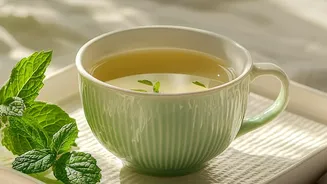
Creating a peppermint tea compress is a simple process. You will need peppermint tea (either 2-3 tea bags or a few tablespoons of loose dried leaves), hot water, and a clean cloth or small towel. First, brew a strong cup of peppermint tea by steeping the leaves or bags in hot water for about 10 minutes, keeping it covered to trap the volatile oils. Once brewed, allow the tea to cool down to a temperature that is comfortable to the touch—it should be warm and soothing, not hot enough to burn. Then, soak your cloth in the tea, wring out the excess liquid until it's damp but not dripping, and your compress is ready to use.
Applying the Compress for Relief
For the best results, find a quiet, comfortable place to lie down. Dimming the lights can also enhance the relaxing effect. Place the damp, warm peppermint tea compress across your forehead and temples. You can also place it on the back of your neck if that's where you feel the most tension. Leave the compress on for about 15 to 20 minutes. During this time, focus on taking slow, deep breaths to help release muscle tension throughout your body. You can re-soak and reapply the compress if it loses its warmth or you can try a cold compress by chilling the tea first, as some people find cold more effective for throbbing pain.
Managing Expectations and Safety
A peppermint tea compress is best viewed as a complementary therapy for mild tension headaches, not a cure for severe or chronic pain. It can provide soothing comfort and may help take the edge off minor discomfort. However, it's not a substitute for medical treatment. If you experience frequent, severe, or progressively worsening headaches, it is essential to consult a healthcare professional. While peppermint tea is generally very safe, you should always be mindful of skin sensitivity. Never use peppermint essential oil on the face of infants or young children, as inhaling the potent menthol can cause serious breathing problems. For adults, if you notice any skin irritation from the compress, discontinue use.