


A Hub for Space Innovation
The International Conference on Spacecraft Mission Operations, or SMOPS-2026, recently held in Bengaluru, has become a crucial forum for the global space community. Organized by the Indian Space Research Organisation (ISRO) and international partners,
the conference brings together experts from agencies like NASA and ESA to discuss the future of managing space missions. This year, a dominant theme was the integration of artificial intelligence and robotics into mission operations, signalling a major shift in how we explore the final frontier.
What are Autonomous Operations?
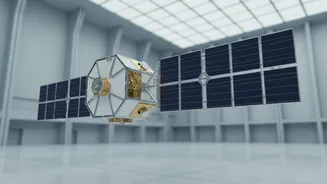
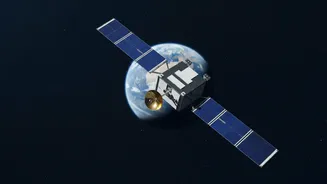
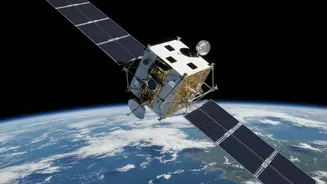
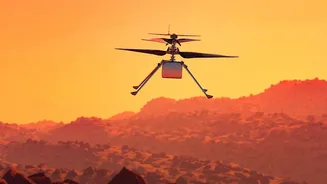
For decades, spacecraft have been sophisticated but largely obedient vessels, relying on constant commands from ground control. Autonomous operations change this dynamic entirely. Powered by AI, a spacecraft can perform tasks independently without direct human intervention. This includes navigating complex terrains, managing its own health by detecting and correcting anomalies, planning scientific observations, and deciding what data is most valuable to send back to Earth. The goal is to shorten the decision-making loop, allowing a spacecraft to react instantly to its environment—a critical capability when communication delays can span minutes or even hours.
The Deep Space Imperative
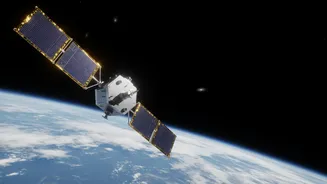
As humanity sets its sights on more distant targets like Mars and the icy moons of Jupiter, autonomy is not just a luxury; it's a necessity. The immense distances involved mean real-time control is impossible. An AI-powered probe can make its own decisions, whether it's dodging an unexpected obstacle or seizing a fleeting scientific opportunity that would be missed by the time ground control even knew about it. Furthermore, autonomy promises to make space missions more efficient and cost-effective. By automating routine tasks and managing large constellations of satellites, AI can reduce the workload on human operators and lower the substantial costs associated with ground-based control.
The Human Role Reimagined
The rise of autonomous systems doesn't make human operators obsolete; it changes their role. Instead of being hands-on pilots for every maneuver, mission controllers are becoming supervisors and strategists. Their focus is shifting from minute-to-minute operations to setting high-level goals, overseeing the AI's performance, and intervening in complex situations that require human ingenuity. This human-machine synergy is a key topic at SMOPS-2026, where the goal is to create systems that augment human capabilities, not replace them.
Overcoming the Hurdles
Deploying fully autonomous systems in space is not without challenges. The environment is harsh, with extreme temperatures and radiation that can damage sensitive electronics and cause data errors. AI systems also consume significant power, a scarce resource on any spacecraft. Perhaps the biggest challenge is trust. Before handing over control of a billion-dollar mission, space agencies need to be certain that the AI is robust, reliable, and secure from cyberattacks. Projects like ESA's A2I Roadmap and PINEBERRY are focused on developing transparent and secure AI, ensuring that operators can understand and trust the AI's decisions.