









An Overdue Economic Update
On July 18, 2026, the Commerce and Industry Ministry announced a major revision to how India tracks its economic health. The list of core infrastructure industries, a vital barometer for industrial performance, has been expanded for the first time in over
a decade. This isn't just an accounting change; it's a recognition that the structure of India's economy has shifted dramatically. The update includes not only a new member but also a new base year for calculation, moving from 2011-12 to 2022-23 to provide a more current and accurate picture of industrial output.
The Original Eight Pillars
Previously, the Index of Core Industries was built on the performance of eight key sectors. These were crude oil, petroleum refinery products, natural gas, fertilisers, steel, cement, coal, and electricity. Combined, these industries carried a substantial weight of over 40% in the broader Index of Industrial Production (IIP), making them a proxy for the nation's manufacturing and infrastructure health. Their collective performance has long been a key indicator for policymakers, economists, and investors trying to gauge the direction of the Indian economy.
Welcome, Iron Ore
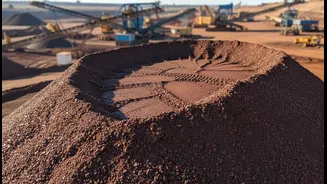
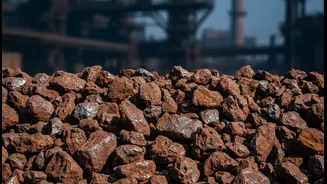
The new ninth member of this exclusive club is iron ore. The government's reasoning is straightforward: given its extensive use in industrial production, particularly as the primary raw material for the burgeoning steel industry, its exclusion was an oversight in a modernizing economy. The inclusion of iron ore aims to capture the performance of the economy more accurately, acknowledging its foundational role in industrial development, especially in states like Odisha, Jharkhand, and Chhattisgarh. This move completes a year-long overhaul of India's key economic statistics, aligning the ICI with updated metrics for GDP, the IIP, and inflation indices.
Refining the Data
Beyond adding a new industry, the revision also refines how existing ones are measured to improve accuracy. To prevent double-counting, the updated ICI will now only consider raw coal production, excluding derivatives like coal middlings and washed coal which are processed from raw coal. Similarly, the steel index will now be compiled using gross production data instead of net production, ensuring consistency with the methodology of the broader Index of Industrial Production. These technical adjustments are designed to create a cleaner, more reliable dataset for analysis.
Why This Change Matters
Updating a core index like the ICI is crucial for effective policymaking and investment. An outdated index risks misrepresenting economic reality, potentially leading to policy blind spots. As new industries gain prominence and old ones evolve, statistical frameworks must adapt. By adding iron ore and recalibrating the base year and methodologies, the government ensures that its primary tools for measuring economic activity reflect what India actually produces today. This leads to better-informed decisions, more accurate growth forecasts, and a clearer understanding for investors of where economic strength truly lies.