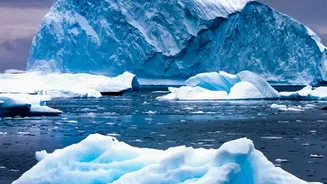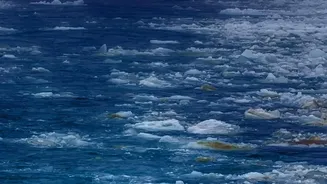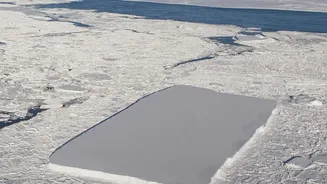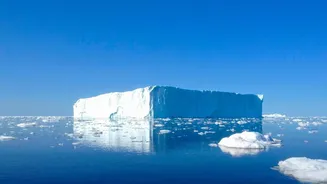





The Big Picture: A Continent in Retreat
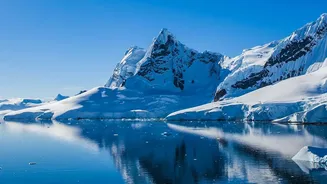
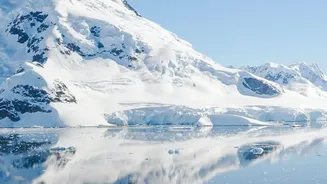
First, let's establish the baseline: Antarctica is losing ice at a staggering rate. Over the past two decades, the continent has shed an average of about 140.5 billion tons of ice per year. Studies from earlier in 2026 confirmed that nearly a quarter
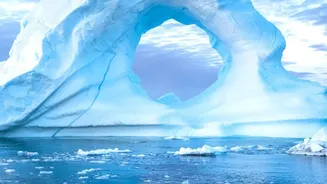
of the glaciers that reach Antarctica's coast are in retreat. Some scientists have even described a process of "Greenlandification," where Antarctica is beginning to show patterns of accelerated melting, shrinking sea ice, and rapid iceberg calving that were once more characteristic of its northern counterpart. This long-term loss is primarily driven by the warming ocean melting the continent's massive ice sheets from below, causing them to thin and flow faster into the sea.
The Surprising Snowfall Event
The recent headlines about an ice "gain" stem from a specific, short-term event detailed in a new study. Researchers found that between July 2021 and April 2023, the Antarctic Ice Sheet gained a remarkable 695 billion tons of mass. However, this wasn't because the melting stopped. Instead, it was caused by exceptionally heavy snowfall over parts of East Antarctica. Scientists traced this phenomenon back to unusually warm ocean water thousands of miles away in the tropics. This warmth triggered a massive atmospheric pattern, known as a Rossby wave train, that funnelled huge amounts of moisture towards the South Pole, resulting in record snow. The study's authors are clear that this was a temporary event reflecting natural climate variability, not a reversal of the long-term melting trend.
Land Ice vs. Sea Ice: The Critical Difference
To understand this seeming paradox, it's essential to know the difference between land ice and sea ice. Land ice, which includes the colossal Antarctic Ice Sheet, is freshwater ice formed from accumulated and compressed snow over thousands of years. When this ice melts and flows into the ocean, it adds a new volume of water, directly causing global sea levels to rise. The recent mass gain was from snow falling onto this land ice sheet. In contrast, sea ice is simply frozen ocean water. It forms in winter and melts in summer. Its melting doesn't raise sea levels, just as an ice cube melting in a glass of water doesn't cause it to overflow. The major concern for climate change and sea-level rise is the melting of land ice, not the seasonal cycle of sea ice.
A Complex and Dynamic System
The temporary mass gain from snowfall isn't the only complexity. For decades, Antarctic sea ice was actually expanding, baffling scientists while Arctic sea ice was rapidly declining. This growth was linked to factors like changing wind patterns pushing ice away from the continent, allowing more ice to form in its place, and a layer of fresh meltwater from land ice creating a surface that freezes more easily. However, that trend reversed dramatically in 2016, with sea ice levels crashing to record lows and not recovering. These fluctuations in both land mass and sea ice show that Antarctica is a highly complex system. Short-term changes and regional anomalies can happen, but they don't negate the overwhelming evidence of a planet that is warming and ice sheets that are shrinking.
What Antarctica's Fate Means for India
What happens in Antarctica does not stay in Antarctica. The melting of its ice sheets is the single largest potential driver of future sea-level rise. Scientists at India's National Centre for Polar and Ocean Research (NCPOR) have warned that a complete melt of Antarctica's ice could raise global sea levels by about 60 metres, which would submerge coastal cities worldwide. Furthermore, due to factors related to Earth's gravity and rotation, sea-level rise is not uniform across the globe. Projections show that the Indian Ocean basin is one of the regions that will experience the highest sea-level rise from Antarctic ice melt. This poses a direct and growing threat to India's vast coastline and major metropolitan areas like Mumbai, Kolkata, and Chennai. Beyond sea level, changes in polar ice can also influence global weather systems, including the Indian monsoon.