






What is an AI Water Footprint?
When we talk about AI's 'water footprint', we're not talking about a computer taking a sip of water. The term refers to the total volume of freshwater used to support AI operations. This happens in two main ways. The most significant is indirect use:
the water consumed by power plants to generate the enormous amount of electricity AI requires. The second is direct use: the water used on-site at data centers, primarily for cooling the powerful, heat-generating servers that train and run complex AI models. While a single AI query might only use a small amount of water, the sheer volume of global AI activity means these small sips add up to a flood.
The Thirst of a Data Center
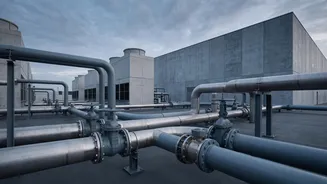
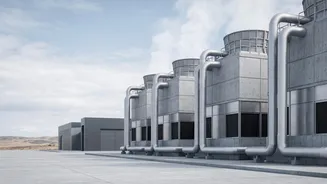
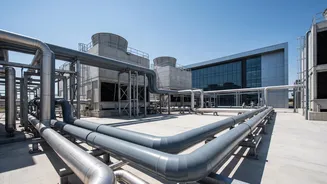
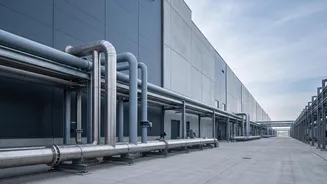
AI models, especially large language models like those behind ChatGPT, require immense computational power from thousands of specialized processors. These processors generate a tremendous amount of heat. To prevent them from overheating and failing, data centers rely on sophisticated cooling systems. A common and energy-efficient method is evaporative cooling, where water is evaporated to dissipate heat. The scale is staggering. A single large data center can use up to five million gallons of water per day, comparable to the daily water consumption of a town of up to 50,000 people. This continuous demand puts a strain on local resources, as much of this evaporated water is removed from the local water cycle.
Putting the Numbers in Perspective
Estimates of AI's total water consumption vary, partly because tech companies have not been consistently transparent, but the figures are massive and growing. In 2023, U.S. data centers directly consumed an estimated 17.4 billion gallons for cooling. Including the water needed for electricity generation, that number jumps to 228 billion gallons. Projections show this thirst increasing dramatically. Some estimates suggest that by 2028, the annual water consumption for AI data centers could surpass one trillion liters globally. This rapid expansion is causing concern, especially since many data centers are located in water-stressed states like Arizona and California.
Local Impacts and Growing Concerns
While the national percentage of water used by data centers might seem small, the impact is intensely local. These facilities act like a constant straw in a community's water supply, drawing millions of gallons from municipal systems, rivers, and aquifers that residents also depend on. This has led to pushback in some communities, which are questioning the trade-offs between the economic benefits of hosting a data center and the long-term strain on essential resources. The concern is that while AI queries come from all over the world, the water to answer them is drawn from a single basin, concentrating the environmental burden on one location.
The Search for Sustainable Solutions
The tech industry is aware of the problem and is exploring solutions. Major companies like Nvidia, Microsoft, and AWS are developing and implementing advanced cooling systems to improve water efficiency. These include closed-loop liquid cooling systems, which recycle water instead of evaporating it, and direct-to-chip cooling that targets heat at the source. Some systems aim for near-zero water use. Other strategies include using non-potable or recycled water for cooling, designing chips that operate at higher temperatures, and strategically locating data centers in cooler climates or areas with abundant water. AI itself is also being used to optimize water management and find new efficiencies.