
What is an Evening Elongation?
In simple terms, an elongation is the angular separation between the Sun and a planet as we see it from Earth. Because Venus orbits closer to the Sun than we do, it never appears to stray too far from it in our sky. It's always seen either trailing the sunset
as an 'Evening Star' or preceding the sunrise as a 'Morning Star'. On August 15, 2026, Venus will reach its greatest evening elongation. This is the point in its orbit where it appears farthest from the Sun on the sky's dome, creating the best window for evening viewing. Imagine two runners on a circular track; Earth is on an outer lane and Venus is on an inner one. Greatest elongation is like the moment when, from our perspective, the inner runner appears to be at their widest possible angle from the stadium's centre light before they start curving back towards it.
The Paradoxical View on August 15
This year, the story of Venus's elongation comes with an interesting twist. While it will be at its widest separation from the Sun, it will simultaneously appear quite low in the western sky for observers in India and the rest of the Northern Hemisphere. This might sound counterintuitive, but it's due to the planet's orbital path dipping southward relative to the Sun's position. This makes for a particularly dramatic, if somewhat brief, viewing opportunity. Its low position means you will need a clear, unobstructed view of the western horizon to catch it before it sets. The reward, however, will be immense. Venus will shine at a breathtaking magnitude of -4.4, making it far brighter than any actual star in the night sky. Its brilliance will allow it to pierce through the twilight, appearing as a spectacular beacon just after sunset.
Shukra: The Star of Myth and Legend
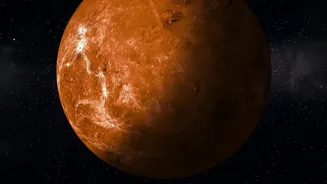
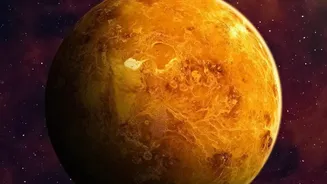
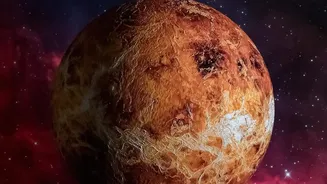
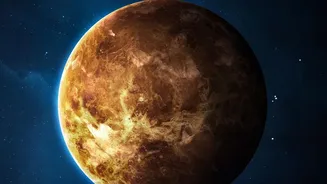
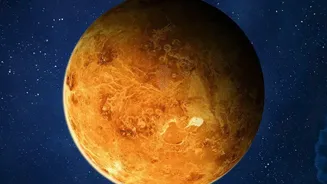
For millennia, this brilliant planet has captured human imagination. To the ancient Romans, it was Venus, the goddess of love and beauty. In Indian culture and Vedic astrology, Venus is known as Shukra. Shukra is revered as a guru, specifically the teacher of the Asuras, and is a symbol of wealth, beauty, and wisdom. The name itself means 'clear' or 'bright' in Sanskrit, a fitting description for the most luminous planet in our sky. The day 'Shukravar', or Friday, in the Hindu calendar is named after the planet, connecting this celestial body to our weekly lives. When you look up at Venus on August 15th, you're not just seeing a ball of rock and acid clouds; you're connecting with a deep history of mythology and science that spans cultures.
Your Guide to Spotting Venus
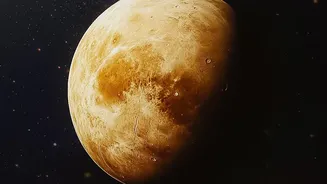
The best part about this astronomical event is that you don't need any special equipment to enjoy it. Venus's sheer brightness makes it easily visible to the naked eye. For the best view on August 15th, find a location with an unobstructed western horizon, away from tall buildings and bright city lights if possible. Start looking shortly after the sun has set. Scan the western sky, and you won't be able to miss the single, incredibly bright, and steady point of light shining through the fading twilight. Unlike stars, which twinkle, Venus will have a steady, silvery gleam. While a telescope is not necessary, a simple pair of binoculars will enhance the view, perhaps even revealing the planet's phase. Around its greatest elongation, Venus appears about half-lit, much like a tiny first-quarter moon.