






The Problem with Powdery Clumps
A clumpy cup of matcha is a letdown in both taste and texture. Those little pockets of dry powder are intensely bitter and create a gritty sensation that ruins the otherwise smooth, creamy experience. These clumps form because high-quality matcha is ground
into an incredibly fine powder. This fineness, combined with static electricity and humidity, causes the particles to stick together. Paradoxically, this tendency to clump is often a sign of high-quality, finely milled matcha. When water is added, these clumps can be stubborn, refusing to dissolve no matter how hard you whisk. The key is to address the issue before the water even touches the powder.
Your First Step: Always Sift
The single most important step to guarantee a clump-free cup of matcha is to sift the powder. This is a non-negotiable part of the process for tea masters and should be for you, too. Using a fine-mesh strainer, simply push your desired amount of matcha (typically one to two teaspoons) through the sieve directly into your bowl. This simple action takes only a few seconds but breaks up any existing clumps and aerates the powder, making it much easier to suspend evenly in water. Many matcha-specific sifters, known as 'furui' in Japan, are available, but any small, fine tea strainer will work perfectly. Do this right before you plan to whisk, as sifted powder can re-clump if left exposed to air for too long.
Get the Water Temperature Just Right
The temperature of your water is crucial for both taste and texture. Using boiling water is one of the most common mistakes; it scorches the delicate tea leaves, resulting in a harsh, bitter flavour. Water that is too hot also causes the proteins in the matcha to seize, which can lock in lumps before your whisk has a chance to work. The ideal temperature range is between 70°C and 80°C (160°F to 175°F). This is hot enough to dissolve the powder smoothly but cool enough to preserve the matcha's sweet, umami notes. If you don’t have a temperature-controlled kettle, simply let your boiled water sit for a few minutes to cool down before pouring.
Mastering the Whisking Motion
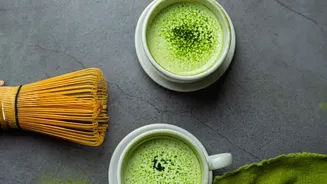
The traditional bamboo whisk, or 'chasen', is designed specifically for preparing matcha. Its many tines are perfect for aerating the tea and creating a rich foam. Before you begin, it’s helpful to soak the tines of your chasen in warm water for a minute to make them soft and pliable. Once you've added the hot water to your sifted powder, the technique is key. Avoid a circular stirring motion. Instead, use a brisk, zigzag motion, tracing a 'W' or 'M' shape with your whisk. This rapid back-and-forth movement, driven by your wrist, is what incorporates air into the liquid, creating the signature frothy layer and ensuring all the powder is suspended. Whisk vigorously for about 20 to 30 seconds until a fine foam covers the surface.
A Note on Modern Tools
While the traditional method is a rewarding ritual, it's not the only way to get a smooth cup. A small, handheld electric milk frother can also be very effective at eliminating clumps. For this method, it's best to start by creating a thick paste. Add just a small amount of hot water to your sifted matcha powder and use the frother to blend it into a smooth, even paste. Once the paste is completely free of lumps, you can add the rest of your water or milk and froth until creamy. A frother is a great alternative if you don't own a chasen, but a traditional whisk generally produces a more delicate and complete aeration.