
A Postcard from a Lonely Valley
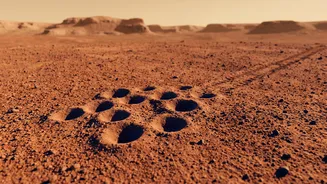
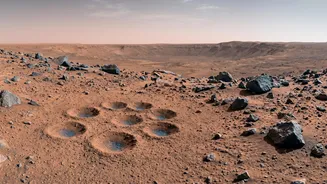
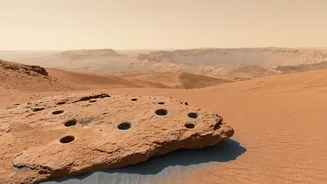
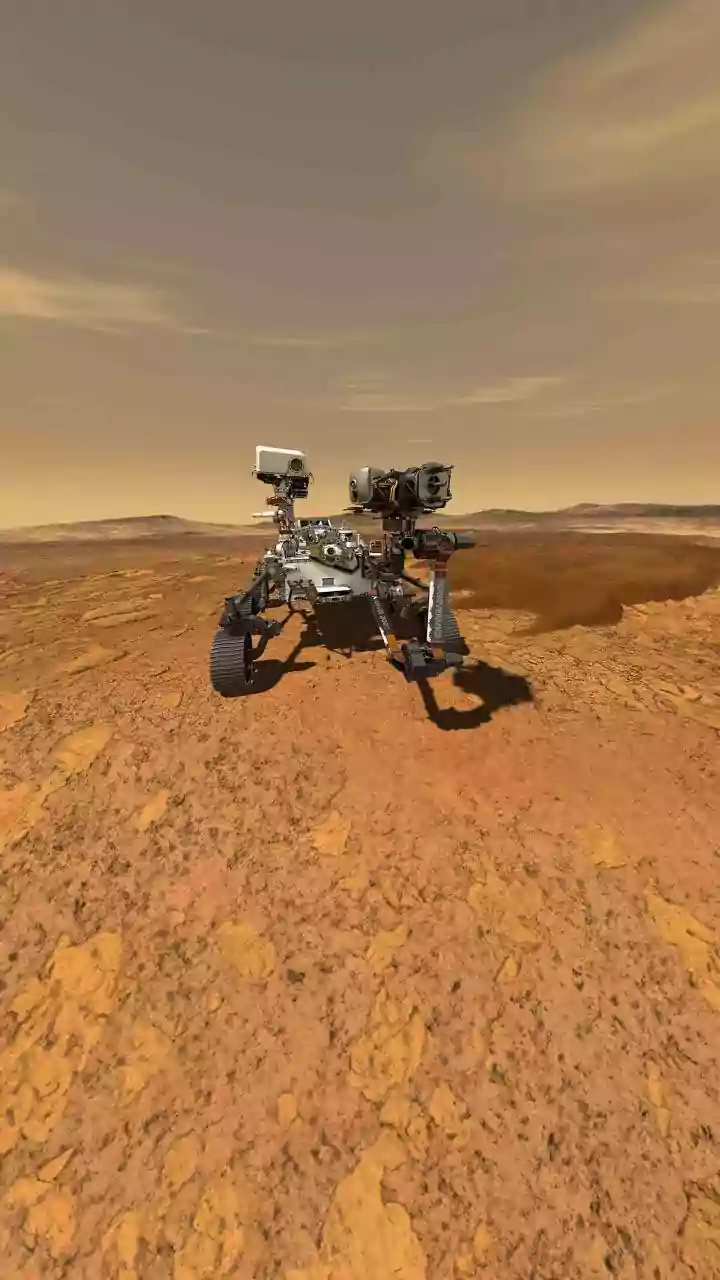
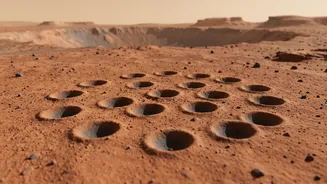
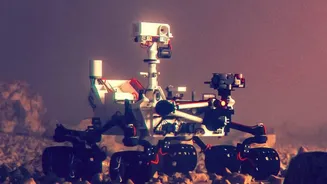
The discovery was made as the Curiosity rover ascended Mount Sharp, a massive mountain in the center of the 154-kilometre-wide Gale Crater. While traversing a region known as Valle Grande, the rover's cameras spotted a series of small, peculiar pits dotting
the rocky ground. One hole, photographed in detail by the Mars Hand Lens Imager (MAHLI) on August 19, 2026, measures only about one centimeter across. While holes are not uncommon on a planet regularly struck by meteorites and weathered by wind, the mission's science team immediately recognized that these were different from anything they had encountered before during the rover's long mission.
Why These Holes Baffle Scientists
So, what makes these tiny pits so mysterious? Usually, when scientists find small cavities in Martian bedrock, there's a straightforward geological explanation. Often, a harder piece of material, like a pebble or a mineral nodule, is embedded in softer rock. Over eons, the softer surrounding rock erodes away, and eventually, the harder piece falls out, leaving a perfectly shaped hole behind. The problem with these new holes is that this explanation doesn't quite fit. According to NASA scientists, these pits are unusually broad and shallow compared to previous examples. More importantly, there are no obvious pebbles or loose nodules nearby that look like they once occupied the cavities. Without the 'key' that should have made the 'lock,' the team is left with a geological puzzle.
The Hunt for an Explanation
Faced with this puzzle, the science team is doing what it does best: gathering more data. The rover isn't just taking simple photos. It's using its Mastcam to capture multiple overlapping stereo images of the area. This technique will allow researchers back on Earth to create detailed three-dimensional models of the pits and the surrounding terrain. By precisely measuring their shape, depth, and relationship to the surrounding rock layers, scientists hope to work backward to figure out what process could have formed them. No one is suggesting an extraordinary origin; the mystery is strictly geological. It's a reminder that even after 14 years on the surface, as one mission scientist noted, Mars still has the capacity to surprise.
Clues to a Changing Planet
Solving the riddle of the tiny holes is more than just a matter of curiosity. The discovery comes as the rover explores sulfate-rich layers of rock on Mount Sharp. These layers are a crucial record of a major turning point in Mars's history: its transition from a planet that once hosted lakes and rivers to the cold, dry world we see today. The rover's primary mission is to read the story told by these rocks. Nearby, scientists also noted other rapid changes in the rock beds, including tough grey layers that resist erosion differently than their neighbors. These holes, along with other recent strange finds like honeycomb-shaped mud cracks, are all pieces of a larger puzzle. Understanding how they formed could provide vital new information about the specific environmental conditions—such as the presence of water, ice, or specific chemical interactions—that were at play millions or billions of years ago.