



First, What Is El Niño?
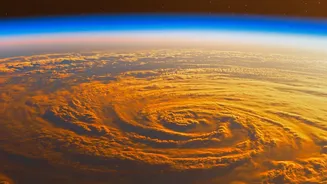
El Niño is a phase of a natural climate cycle called the El Niño-Southern Oscillation (ENSO). In a normal year, strong trade winds blow from east to west across the Pacific Ocean, pushing warm surface water towards Asia. This process helps fuel the moisture
that feeds India's southwest monsoon. During an El Niño event, these trade winds weaken or even reverse. As a result, the vast pool of warm water shifts eastward, away from Asia and towards the coast of South America. This fundamental change in ocean temperature disrupts global atmospheric circulation, altering weather patterns worldwide. For India, this typically means weaker monsoon winds and drier conditions, as the main rain-producing zone moves away from South Asia.
The Status: A 'Super El Niño' in 2026
The current El Niño event is not just present; it's exceptionally strong. International climate agencies are monitoring a rapidly intensifying event, with some forecasting it to become one of the strongest on record. According to the World Meteorological Organization (WMO), El Niño is expected to strengthen further through the August-October 2026 period. Data from agencies like the US National Oceanic and Atmospheric Administration (NOAA) confirms that key indicators reached record levels for the June-July period, developing with a strength and speed not typically seen this early in the cycle. Forecast models project that sea surface temperatures in the key Pacific region could peak at levels warmer than any observed since 1950, with an 81% chance of a 'very strong' El Niño by the end of the year. This event is expected to persist into the early months of 2027.
The Impact on India's Monsoon
The connection between El Niño and a weaker Indian monsoon is well-documented. Historically, most drought years in India have coincided with El Niño years. The India Meteorological Department (IMD) had already forecast a below-normal monsoon for 2026, anticipating the development of this El Niño. This has largely played out as expected. June 2026 saw a significant rainfall deficit of nearly 40%. While July brought a recovery with rainfall at 101% of the usual amount, this was not evenly distributed and did little to erase the early deficit in many areas. As of early August, the cumulative seasonal rainfall for the country remains about 12% below the long-period average, with nearly half of all districts facing deficient rainfall. Looking ahead, the IMD has forecast below-normal rainfall for August and for the second half of the monsoon season (August-September).
Consequences for Agriculture and the Economy
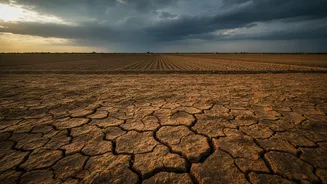
A weak monsoon has direct consequences for India's agricultural sector and wider economy. Nearly half of the country's farmland is rain-fed, making it highly dependent on monsoon showers for Kharif crops like rice, cotton, and pulses. Deficient rainfall can delay sowing, reduce soil moisture, and ultimately lower crop yields. This directly impacts farm incomes and can slow rural spending on goods like tractors and two-wheelers. The ripple effects extend to the entire population. Lower agricultural output can lead to higher food prices, putting pressure on household budgets and overall inflation. While India's economy has become more resilient to a poor monsoon than in past decades, the agricultural sector, which employs a large portion of the workforce, remains vulnerable.
A Complex and Uneven Picture
It's important to note that while El Niño increases the odds of a poor monsoon, it doesn't guarantee it. Other climate factors, like the Indian Ocean Dipole (IOD), can sometimes counteract its effects. However, forecasts currently suggest a positive IOD may develop, which could influence weather patterns, but the dominant driver remains the powerful El Niño. The impact is also not uniform. The IMD's forecasts note that even within a below-normal season, some parts of peninsular, central, and northeast India might receive normal to above-normal rainfall at times. Conversely, even in a dry season, localised, intense rainfall events can still cause floods and landslides, as has been seen in parts of the Himalayas. This creates a complex challenge of managing both water scarcity in some regions and flood risks in others.