




What 'Supervolcano' Actually Means
The term isn't just about the size of a volcano; it’s about the size of a past eruption. Scientifically, a volcano may be classified as a supervolcano if it has, at some point in its history, produced an eruption of magnitude 8 on the Volcano Explosivity
Index (VEI). The VEI is a logarithmic scale, meaning a VEI 8 eruption is at least ten times larger than a VEI 7. A VEI 8 eruption, also known as a 'supereruption', is one that ejects more than 1,000 cubic kilometres (or 240 cubic miles) of volcanic material. This is enough to bury an entire country under a thick layer of ash. Examples of volcanic centres that have had such eruptions include Yellowstone in the United States, Lake Toba in Indonesia, and Taupō in New Zealand.
A Media Term, Not a Scientific Class
Many scientists are wary of the 'supervolcano' label because it was popularised by media, not born from rigorous scientific classification. The term came into widespread use after a 2005 docudrama film, and its sensational nature can be misleading. Some experts argue that calling a volcano a 'supervolcano' implies it only produces enormous eruptions, which is untrue. In fact, the most common form of activity at these sites is much smaller, such as lava flows or hydrothermal events. For instance, since its last supereruption 631,000 years ago, Yellowstone has experienced around 80 smaller eruptions, mostly lava flows that would have minimal direct impact outside the park.
Eruption History, Not Current Status
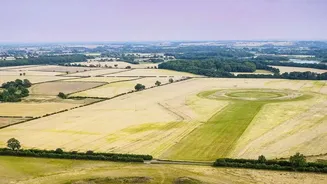
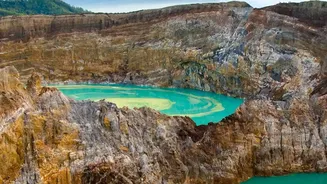
A key point of caution is that 'supervolcano' describes a volcano’s past capability, not its present threat level. A volcano that has had a VEI 8 eruption is not perpetually on the brink of another one. The conditions required for such a massive eruption are immense and build over vast timescales. There is currently no evidence to suggest that any known supervolcano, including Yellowstone, is on the verge of a catastrophic eruption. The term also creates a false visual. These volcanic systems don't look like towering, cone-shaped mountains. Instead, they are vast depressions called calderas, formed when the ground collapses into the emptied magma chamber after a massive eruption.
Misleading the Public on Risk
Perhaps the biggest reason for caution is that the label can distort the public’s perception of risk. The focus on the least likely, most catastrophic scenario distracts from the more probable, smaller-scale hazards. At Yellowstone, for example, the most likely hazardous events are hydrothermal explosions—where hot water and steam erupt like a geyser, hurling rocks—which can occur with little warning. These are a genuine, localized threat to anyone in the immediate vicinity. Fixating on an unlikely 'supereruption' can cause unnecessary anxiety and obscure the real, ongoing geological processes that scientists monitor daily. Some experts suggest using a more precise term like 'caldera system' to avoid the hype and focus on the science.