



The All-Important Qualification: Access
The single most important factor when planning a trip to many of India's most pristine lakes isn't your budget or your backpack—it's your access. Many of these stunning water bodies lie in areas that are geographically remote, ecologically sensitive,
or strategically important. As a result, visiting them is a privilege governed by a crucial qualification: the ability to secure the right permits and permissions. This isn't just red tape; it's a system designed to manage tourist flow, protect fragile environments, and ensure safety in regions close to international borders. Forgetting this step doesn't just complicate your trip; it can end it before it even begins. The core of your planning should revolve around understanding and obtaining the necessary Inner Line Permits (ILPs) for Indian citizens or Protected Area Permits (PAPs) that are often required for these locations.
Case Study 1: The High-Altitude Marvel
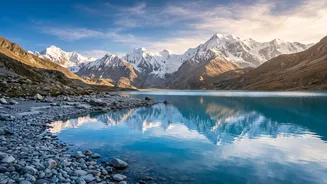
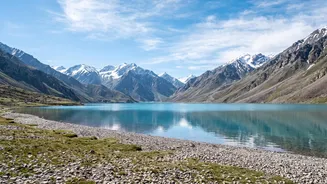
Consider Gurudongmar Lake in North Sikkim, one of the highest lakes in the world, sitting at an altitude of over 17,000 feet. Its otherworldly beauty is matched by its stringent access rules. Reaching this lake is impossible without a Protected Area Permit (PAP), which is exclusively available to Indian tourists and must be arranged through a registered Sikkim tour operator. Foreign nationals are not permitted to visit the lake at all. The planning doesn't stop there. Children under five are not allowed due to the extreme altitude. Furthermore, you cannot simply drive there yourself; the journey must be made with an authorized operator, and the permit requires a minimum itinerary of two nights in the region to aid acclimatization and ensure safety.
Case Study 2: The Border-Zone Beauty
Pangong Tso in Ladakh is another iconic lake whose breathtaking, colour-changing waters straddle the India-China border. Its location in a sensitive border region means all visitors, including Indian nationals, must obtain an Inner Line Permit (ILP). This permit can be applied for online or in person at the DC office in Leh, but it's a non-negotiable requirement that is checked at multiple points along the journey. Beyond the permit, the journey itself demands significant planning. The high-altitude pass, Khardung La, requires careful acclimatization. The Leh administration officially advises a mandatory 48-hour acclimatization period in Leh before ascending to higher altitudes like Pangong Tso to prevent acute mountain sickness. This rule forces a slower, more deliberate pace—a far cry from a spontaneous getaway.
Case Study 3: The Eco-Sensitive Sanctuary
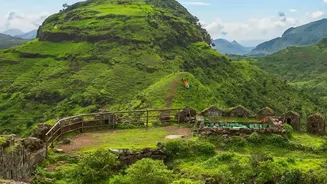
Beyond the Himalayas, many other lakes fall within designated Eco-Sensitive Zones (ESZs) or protected forest areas. These zones act as buffers around national parks and wildlife sanctuaries to protect biodiversity. While a specific permit might not always be the primary hurdle, travel is often regulated. Visiting lakes in these areas may require hiring official forest department guides, adhering to strict 'leave no trace' policies, and following rules about vehicle access and timings. Commercial tourism and construction are heavily restricted, so accommodation might be limited to small-scale homestays or eco-resorts that comply with stringent environmental norms. Planning here means researching the specific rules of the sanctuary you're entering and aligning your travel style with principles of conservation, not just convenience.
Your Essential Planning Checklist
To ensure a smooth journey to one of these peaceful lakes, your planning must be meticulous. First, confirm the exact permits required for your nationality and the specific destination. Research whether you can apply independently or if you must go through a registered travel agent. Second, build acclimatization days into your itinerary. For any destination above 10,000 feet, rushing is a health risk. Third, verify the seasonal accessibility. High-altitude roads are often closed for months due to snow, and some lakes may be temporarily off-limits for administrative or safety reasons. Finally, book transportation and basic accommodation in advance. In these remote areas, options are limited and can be fully booked weeks or months ahead, especially in peak season.