






A Tale of Two Extremes
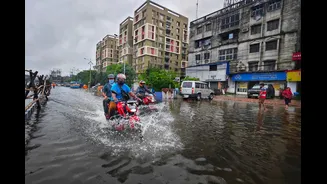
Every year, headlines paint a picture of a nation at the mercy of its weather. One state government might be airlifting supplies to flooded villages, while its neighbour is deploying water tankers to drought-stricken districts. This isn't an anomaly;
it's the reality of India's complex relationship with the monsoon, a lifeline that is increasingly unpredictable. Climate change is amplifying this volatility. Studies show that for every degree Celsius of warming, monsoon rainfalls are likely to increase by about 5%, leading to stronger and more erratic seasons. This means more intense downpours in short bursts rather than steady, predictable rain, leading to flash floods in some areas and long dry spells in others. This variability makes it incredibly challenging for individual states to manage their water resources effectively when the problem doesn't recognise their borders.
Why State-Level Planning Falls Short
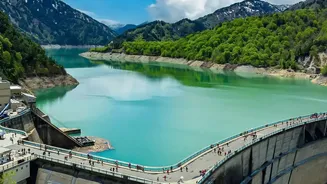
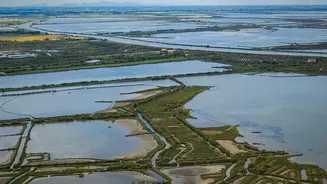
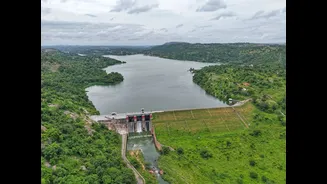
Water, by its very nature, is a flowing resource. Rivers cross state lines, and rainfall is part of a vast, interconnected atmospheric system. The natural unit for water management is not a district or state, but a river basin—the entire geographical area drained by a river and its tributaries. When one state builds a barrage or a dam without consulting its downstream neighbour, it can have profound consequences. Similarly, flood-control measures in an upstream state can exacerbate flooding in a downstream one. Planning in administrative silos leads to a fragmented and often counterproductive approach. This is why experts and national policies have long advocated for integrated river basin management, where planning and decisions are made for the entire hydrological system, irrespective of political boundaries.
The Cooperation Deficit
Unfortunately, India has a long history of inter-state water disputes. Conflicts over rivers like the Cauvery, Mahanadi, and Krishna have spanned decades, often ending up in protracted legal battles in tribunals and the Supreme Court. These disputes are frequently rooted in a zero-sum mentality, where one state's gain is seen as another's loss. Political rhetoric often intensifies these conflicts, making cooperation difficult even when it's the most logical solution. As recently as July 2026, tensions have flared up again over the sharing of Cauvery water between Tamil Nadu and Karnataka due to a weak monsoon. However, there are glimmers of hope. Recent dialogues between Odisha and Chhattisgarh to resolve the Mahanadi dispute through negotiation show that a cooperative path is possible.
A Blueprint for Collaborative Action
Meaningful cooperation goes beyond settling disputes; it requires a proactive, institutional framework. This starts with robust data sharing. States need real-time, transparent access to information on rainfall, river flows, snowmelt, and reservoir levels across an entire basin. The Central Water Commission (CWC) already plays a crucial role in collecting and disseminating this data, but its integration into joint decision-making needs to be strengthened. True collaboration would involve joint flood forecasting, where an early warning in an upstream state automatically triggers preparedness actions downstream. It would mean coordinating dam releases to mitigate flood peaks and ensure equitable water distribution during lean periods. It also involves collaborative efforts in long-term planning, such as investing in watershed development, rainwater harvesting, and climate-resilient crops across the region.
The Way Forward: Adaptation Through Alliance
As climate change continues to disrupt weather patterns, clinging to outdated, state-centric water management strategies is a recipe for disaster. The challenges are simply too large and interconnected for any single region to handle alone. The choice is between continuing a cycle of conflict and crisis or building a future of shared resilience. Empowering and creating effective river basin organisations, guided by scientific data and a spirit of cooperative federalism, is essential. Projects like the inter-linking of rivers, though complex, also stem from this same logic of moving water from surplus to deficit areas. Moving forward, viewing neighbouring states not as competitors for a scarce resource but as partners in managing a shared challenge is the only sustainable path. The goal must be to ensure water security for all, not just for one.