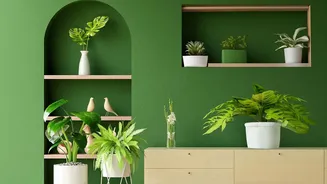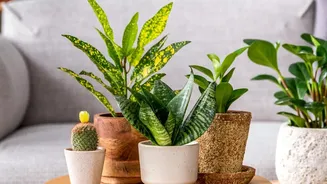






The Snake Plant (Sansevieria trifasciata)
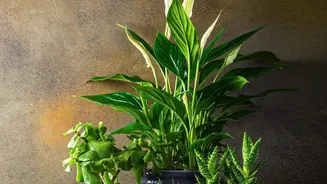
Often called 'mother-in-law’s tongue', the snake plant is a champion of low-maintenance greenery. It's famous for its hardy nature and striking, upright leaves. The claim is that it filters out indoor air pollutants like formaldehyde and benzene. Uniquely,
it also releases oxygen at night, making it a popular choice for bedrooms. The reality, however, requires a bit of perspective. While the 1989 NASA study did show snake plants could absorb toxins in a sealed chamber, later analysis has clarified the context. To significantly clean the air in a typical, ventilated room, you would need an impractically large number of them—some estimates suggest hundreds. So, while your single snake plant isn't an air purifier, it remains a beautiful, resilient plant that adds life to any space.
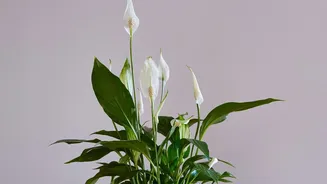
The Peace Lily (Spathiphyllum)
With its glossy dark leaves and elegant white spathes, the peace lily is a household favourite. It was another star of the NASA study, shown to be effective at removing all tested volatile organic compounds (VOCs), including ammonia. This reputation has made it a go-to for those seeking 'functional' plants. But again, the lab conditions of that study—a small, sealed environment—are very different from your living room. The natural air exchange in your home means the plant's filtering effect is heavily diluted. You'd need a dense, indoor jungle to replicate the study's results. Enjoy the peace lily for its beauty and its helpful tendency to wilt dramatically when it needs water, which is a great feature for beginner plant parents.
The Spider Plant (Chlorophytum comosum)
The spider plant, with its cascading arch of variegated leaves and easy-to-propagate 'spiderettes', is incredibly popular. It’s a forgiving plant, making it ideal for new enthusiasts. It gained fame for its ability to remove formaldehyde and other VOCs in lab settings. These findings, rooted in the same NASA research, cemented its status as an 'air-cleaner'. However, modern studies have put this into a real-world context. The rate at which a few spider plants can clean the air is far slower than a building's natural ventilation rate. So, while they do have this capability in a controlled setting, their impact in an average home is minimal. The real joy of a spider plant lies in its cheerful appearance and how easily it lets you share its offspring with friends.
The Money Plant (Epipremnum aureum)
Known as Golden Pothos or Devil's Ivy, the money plant is a staple in Indian homes, loved for its trailing vines and heart-shaped leaves. It's often praised for its ability to thrive in various conditions and for its supposed air-purifying qualities, particularly in filtering out formaldehyde, benzene, and xylene. Like the others on this list, its reputation is built on the results from sealed chamber experiments. The leap from a lab to your home is significant. In reality, the constant introduction of new pollutants and natural airflow makes the purifying effect of a single plant negligible. Rather than seeing it as a green air filter, appreciate the money plant for its hardy, fast-growing nature that can quickly bring a lush, tropical feel to any corner of your home.
The Areca Palm (Dypsis lutescens)
The feathery fronds of the Areca Palm bring a touch of the tropics indoors and it's frequently recommended as a natural humidifier and air purifier. It was noted for its ability to remove toxins like xylene and toluene. While it is an excellent plant for adding some humidity to a dry room, its air-cleaning powers face the same limitations as the others. The volume of air in a home and the rate of ventilation mean you would need a forest, not a few pots, to make a meaningful difference in air quality. Don't let that dissuade you from getting one. The Areca Palm is a stunning statement plant that can make a space feel more vibrant and alive, which is a powerful benefit in its own right.
The Boston Fern (Nephrolepis exaltata)
The Boston Fern is a classic with lush, ruffled fronds that creates a full, green look. It’s often touted as one of the best plants for removing formaldehyde from the air, a claim that helped it become a household name in air purification. This fern, like the others, demonstrated its capabilities within the confines of a sealed laboratory chamber. However, translating that to practical benefits in a home with open windows and doors is a stretch. Recent analyses confirm that the sheer number of plants required to match even basic ventilation is simply not practical for most people. The real value of a Boston Fern is its timeless aesthetic and its ability to thrive in humid environments like bathrooms, adding a touch of elegance and nature where it's least expected.