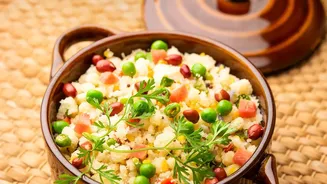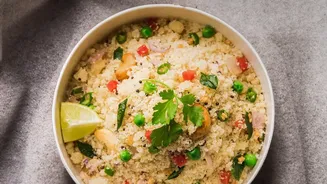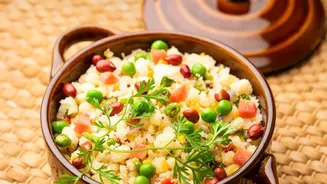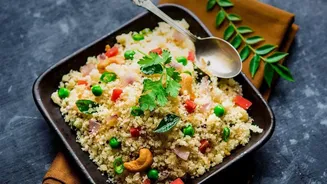



The Classic: Semolina (Rava) Upma
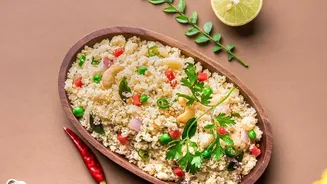
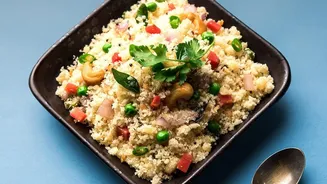
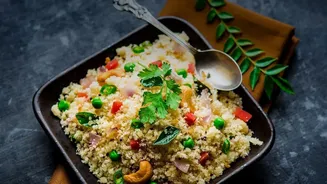
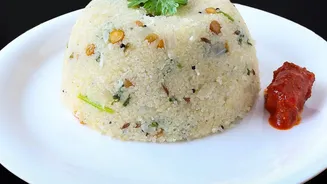
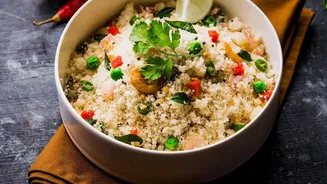
Before we travel, let's start with the most widely recognised version. Made from dry-roasted semolina, or rava, this is the upma that graces breakfast tables from north to south. Its preparation is simple and swift: mustard seeds, urad dal, curry leaves,
and sometimes onions are tempered in oil, followed by the rava and hot water. The result is a light, fluffy porridge that can be customised with a handful of vegetables like peas and carrots. It’s a versatile canvas, a common starting point from which countless regional masterpieces are created.
Karnataka's Fiery Khara Bath
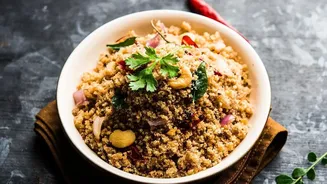
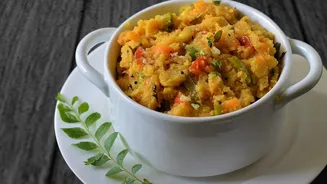
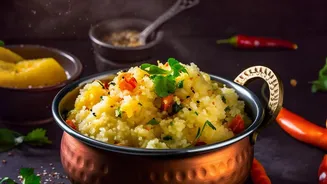
In Karnataka, upma takes on a bold and spicy personality known as Khara Bath. It's richer and more flavourful than its simpler cousin, often loaded with chopped vegetables like tomatoes, carrots, and beans. The secret lies in a special masala powder, typically a vangi bath or bisi bele bath powder, which gives it a distinctive taste and a warm, brownish hue. Finished with a squeeze of lemon and a dollop of ghee, Khara Bath has a soft, melt-in-the-mouth texture. It's famously served alongside its sweet counterpart, Kesari Bath, in a combination called 'Chow Chow Bath'.
Tamil Nadu's Hearty Arisi Upma
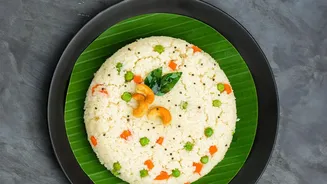
Moving to Tamil Nadu, the grain itself changes. Here, Arisi Upma is made not with semolina but with coarse, broken raw rice, sometimes pounded together with toor dal and black pepper. This gives it a completely different texture—less of a porridge and more of a hearty, grain-forward dish. It’s a traditional tiffin item, often cooked in a bronze pot which creates a coveted crispy layer at the bottom. Served with coconut chutney or a tangy sambar, Arisi Upma is a rustic and deeply satisfying meal that speaks of traditional home cooking.
Andhra's Tangy Puli Upma
The name gives it away: 'puli' means tamarind in Telugu, and this version of upma packs a delicious, tangy punch. Common in Andhra Pradesh and Telangana, Puli Upma can be made with either rice flour or semolina cooked in tamarind-infused water instead of plain water. The flavour profile is reminiscent of another South Indian favourite, Puliyodarai (tamarind rice). The sourness of the tamarind is balanced with the heat of red chillies and the earthy aroma of gingelly (sesame) oil, creating a complex and addictive breakfast dish that needs no side dish at all.
Maharashtra's Pearly Sabudana Upma
While often considered a dish in its own right, Sabudana Khichdi is widely referred to as Sabudana Upma in many regions and fits the theme of a regional grain-based breakfast. Popular in Maharashtra, especially during fasting periods like Navratri, it uses soaked tapioca pearls (sago) as its base. The process involves sautéing the soft, translucent pearls with potatoes, roasted peanuts, green chillies, and cumin. The result is a delightful mix of chewy, soft, and crunchy textures, with a subtly sweet and spicy flavour. Getting the non-sticky, pearly texture is an art, but one that yields a uniquely satisfying breakfast.