






A Wake-Up Call from Deep Space
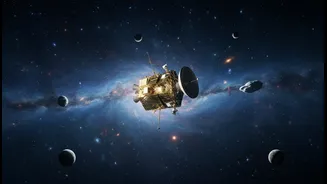
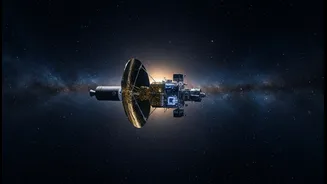
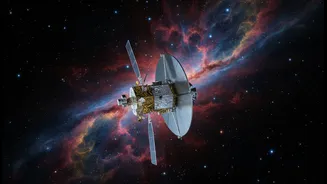
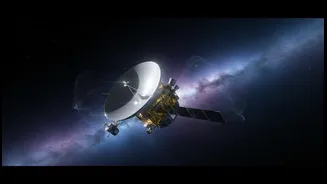
After a 321-day hibernation to conserve power, NASA's New Horizons probe is awake and back to work. In late June 2026, mission controllers at the Johns Hopkins Applied Physics Laboratory confirmed they had received signals from the resilient explorer,
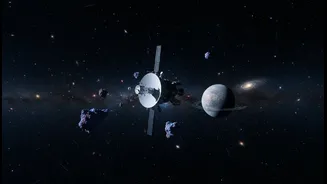
which is currently journeying through the Kuiper Belt. The distance is almost unfathomable — nearly 9.5 billion kilometres from Earth, so far that the signal took almost nine hours to reach us. This wake-up call wasn't for another dramatic flyby, but for the start of a new chapter in one of space exploration's most epic voyages.
From Planetary Paparazzi to Deep-Space Sentinel
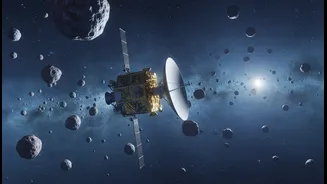
New Horizons etched its place in history with two groundbreaking encounters. In 2015, it completed the initial reconnaissance of the classical solar system by flying past Pluto, revealing a geologically active world of nitrogen glaciers and hazy skies. In 2019, it flew past Arrokoth, the most distant and primitive object ever explored by a spacecraft, giving humanity its first look at a building block of planets. With those primary objectives accomplished, the mission has evolved. There isn't another specific world on its itinerary right now. Instead, New Horizons has transformed into a unique deep-space observatory. Its new purpose is to study the environment of the outer solar system from a vantage point no other active mission possesses.
Exploring the Sun's Vast Bubble
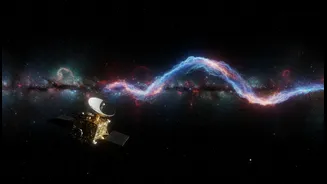
The probe's new focus is on heliophysics — the study of our Sun and its vast sphere of influence, known as the heliosphere. This is the giant magnetic bubble created by the solar wind, a constant stream of charged particles flowing from the Sun. New Horizons is using its instruments to measure how this solar wind behaves as it travels billions of kilometres from its source. Recent data from the spacecraft confirmed that the wind slows down as it interacts with gas and dust from interstellar space, a bit like a boat's wake diminishing as it crosses a huge lake. Understanding these interactions is crucial for predicting the boundary of our solar system and the levels of cosmic radiation that future astronauts on long-duration missions might face.
The Scientific Toolkit for the Void
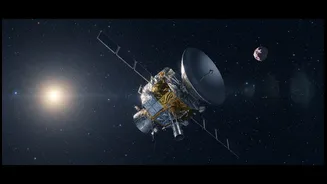
Even during its long hibernation, some of the spacecraft's instruments remained active, continuously sampling the environment. The Solar Wind Around Pluto (SWAP) and Pluto Energetic Particle Spectrometer Science Investigation (PEPSSI) instruments kept tabs on the plasma environment, while the student-built Venetia Burney Student Dust Counter did exactly what its name suggests: it counted dust particles. Now that the probe is fully awake, its other tools will join in. The Alice ultraviolet spectrograph will observe the distribution of hydrogen gas in the outer heliosphere, and its powerful Long-Range Reconnaissance Imager (LORRI) will continue to observe distant Kuiper Belt objects and measure the faint, collective light of the universe, known as the cosmic optical background.
A Lonely Outpost on the Interstellar Frontier
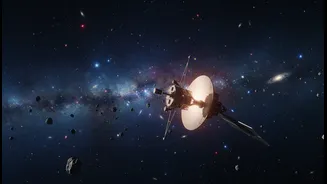
New Horizons is not just a machine; it's a proxy for human curiosity, pushing the boundaries of what we know. Along with the legendary Voyager 1 and 2 probes, it is one of the few human-made objects to reach this cold, dark, and mysterious region. Its journey provides invaluable data, offering a unique opportunity to conduct coordinated observations with the Voyager probes before their power supplies finally run out. Expected to leave the Kuiper Belt around 2028 or 2029, New Horizons will continue its journey into the vast emptiness between the stars, a silent ambassador carrying the legacy of our desire to explore. While a flyby of another distant object isn't ruled out if a suitable target is found, the mission's value now lies in its steady, patient observation of the space between worlds.