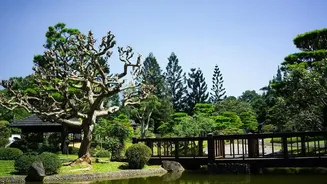





Shinjuku Gyoen National Garden, Tokyo
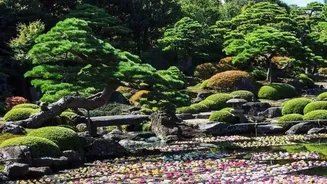
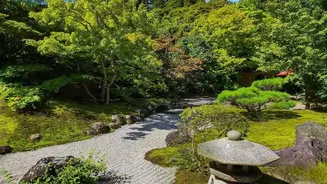
In the shadow of Shinjuku's skyscrapers, this vast park is a world away from the city's frantic energy. Once the estate of a feudal lord, Shinjuku Gyoen was redesigned in 1906, blending three distinct styles into one harmonious landscape. Visitors can
wander through an English Landscape garden with wide, rolling lawns, a formal French garden with symmetrical flowerbeds, and a traditional Japanese garden complete with teahouses and meticulously crafted ponds. The garden's history dates back to the Edo Period, eventually becoming an imperial garden before opening to the public in 1949 after World War II. With over 144 acres, its sheer size allows for a genuine sense of peace, whether you're admiring the cherry blossoms in spring or the reconstructed greenhouse filled with tropical plants.
Meiji Jingu's Inner Garden, Tokyo
While thousands visit the famous Meiji Jingu Shrine daily, many overlook the tranquil Inner Garden (Gyoen) tucked away to the south. This hidden gem requires a separate entrance fee but rewards visitors with a quiet, reflective atmosphere. The garden was designed for Emperor Meiji and Empress Shoken and was a place they often visited. It feels less like a public park and more like a private woodland escape. Its most famous feature is the iris garden, which bursts into color in June, but the winding forest paths, the Nan-chi pond, and the traditional teahouse offer a peaceful experience year-round. The garden also contains Kiyomasa's Well, considered a 'power spot' for those seeking restorative energy.
Arashiyama Bamboo Grove, Kyoto
On the western outskirts of Kyoto, the Arashiyama Bamboo Grove provides an immersive, otherworldly experience. Walking the path through towering stalks of bamboo feels like stepping into another dimension, as the dense canopy filters the sunlight and muffles the sounds of the outside world. The sound of the wind rustling through the bamboo is so iconic it has been recognized by the Japanese government as one of the country's '100 Soundscapes'. Though popular with visitors, an early morning visit can provide the solitude needed to fully appreciate its serene beauty. The grove connects several temples and shrines, including the entrance to Tenryu-ji Temple, making it a natural corridor of tranquility.
Tenryu-ji Temple Garden, Kyoto
Adjacent to the famous bamboo grove, the garden at Tenryu-ji Temple is a masterpiece of landscape design and a UNESCO World Heritage Site. Created in the 14th century by the Zen master Muso Soseki, the garden has remained largely intact despite the temple buildings being rebuilt over centuries. Its central feature is the Sogenchi Pond, which beautifully reflects the surrounding maple and pine trees. The design masterfully uses 'borrowed scenery' (shakkei), incorporating the Arashiyama mountains into its backdrop to create a sense of infinite depth. Visitors can sit on the temple's veranda and gaze upon the garden, a practice designed to calm the spirit and encourage meditation.
Osaka Castle Park, Osaka
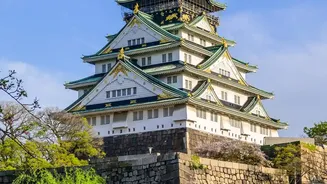
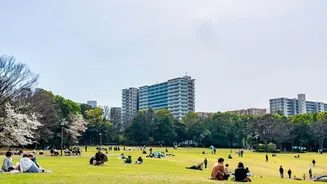
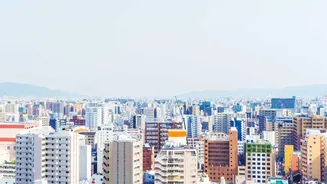
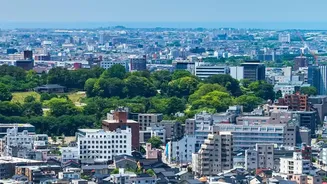
Right in the heart of Osaka, one of Japan's most vibrant commercial centers, lies Osaka Castle Park. This expansive green space provides a dramatic contrast to the urban environment surrounding it. While the impressive Osaka Castle is the main attraction, the park itself covers about two square kilometers, offering vast lawns, forests, and seasonal gardens. It's a beloved spot for locals for picnics, jogging, and, especially, cherry blossom viewing in the spring at Nishinomaru Garden. Unlike the meticulously manicured strolling gardens, Osaka Castle Park is a sprawling public space where nature and history converge, offering a powerful reminder of the city's past while serving as a vital green lung for its present.