







A Nationwide AI Infrastructure Push
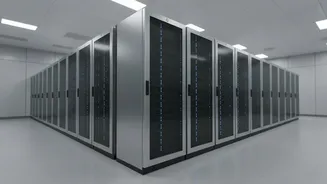
Under the ambitious IndiaAI Mission, the Indian government has approved a sweeping plan to establish 58 Artificial Intelligence Centres of Excellence (AI-CoEs) across the country. Recent announcements confirm that these centres, created in collaboration
with state governments and industry partners, are designed to be hubs for innovation, skilling, and startup growth. The mission, backed by an outlay of over ₹10,371 crore, also includes the creation of 543 Data & AI Labs in Tier-2 and Tier-3 cities to democratise AI education and skills like data annotation and applied data science. These initiatives are part of a multi-pillar strategy to build a comprehensive AI ecosystem, covering everything from high-end computing infrastructure to the development of indigenous Large Language Models (LLMs).
From Bricks and Mortar to Brains and Mentorship
While establishing physical centres is a critical first step, the conversation is rapidly evolving. The headline initiative is not just about buildings and servers; it's about the human capital required to make them effective. As AI automates routine tasks, the very nature of on-the-job learning is changing, creating a skills gap that only experienced human guidance can fill. Experts and policymakers recognise that for India to transition from a follower to a leader in AI, the quality of instruction and mentorship within these new centres is paramount. The focus is shifting from simply training lakhs of candidates to cultivating a generation of innovators who can think critically and solve complex, real-world problems. This places the spotlight firmly on the mentors, guides, and faculty who will shape the country's AI talent pipeline.
The Mentor Deficit Challenge
India faces a significant challenge: a deficit of qualified, experienced AI mentors. The demand for quality mentorship far exceeds the available supply. Several factors contribute to this gap. Firstly, the most experienced AI professionals are often in high-demand, high-paying industry roles, making it difficult for educational institutions to attract and retain them as full-time faculty. Secondly, much of the existing academic training can be theoretical, lacking the practical, battle-tested wisdom that comes from deploying AI solutions in a commercial environment. This creates a disconnect where students learn the 'what' of AI but not the 'how' or 'why' of its real-world application. Furthermore, there are ethical dilemmas and a need for guidance on responsible AI, including tackling issues like algorithmic bias and data privacy, which require seasoned oversight.
Defining the Modern AI Mentor
The ideal mentor for this new era of AI is not just a technical expert. They are a unique blend of researcher, industry veteran, and innovation coach. The government and partner institutions are looking for individuals who can provide career guidance, help build contextualised knowledge, and manage expectations about roles in the AI and analytics industry. Effective mentors need to make their own leadership and decision-making processes visible, explaining the reasoning behind strategic choices to cultivate similar skills in their mentees. The IndiaAI Mission itself is seeking industry partnerships for mentorship to provide students with career guidance and internship opportunities. These mentors are expected to foster interdisciplinary research and collaboration between industries, startups, and educational institutions, turning academic projects into scalable, socially impactful solutions.