




Why Protein is the First Piece of the Puzzle
Protein is widely known as the most satiating macronutrient, and for good reason. It works by influencing the hormones that control your appetite. When you eat protein, your body releases hormones that signal fullness to your brain, while suppressing
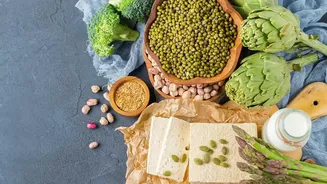
ghrelin, the hormone that tells you you're hungry. Because it takes longer to digest than carbohydrates, it provides a slow, sustained release of energy that helps you feel satisfied long after a meal. Many people who feel hungry on a vegetarian diet simply aren't getting enough protein. Excellent vegetarian sources include lentils (dal), chickpeas (chana), kidney beans (rajma), and soy products like tofu and tempeh. For those who consume dairy, paneer and Greek yogurt are fantastic options.
The Filling Power of Fibre
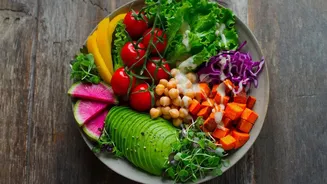
Fibre is the other half of the satiety equation. Found exclusively in plant foods, fibre adds bulk to your meals without adding extra calories. There are two types, and both help with fullness. Soluble fibre dissolves in water to form a gel-like substance in your stomach, which physically slows down digestion and the absorption of sugar. This delayed stomach emptying helps you feel full for longer and prevents the sharp blood sugar spikes that can lead to cravings. Insoluble fibre, or 'roughage', adds bulk and helps food move through your digestive system. Nearly all whole plant foods contain a mix of both. Great sources include whole grains like oats and quinoa, fruits such as apples and pears (with the skin on), and vegetables like broccoli and sweet potatoes.
Better Together: The Synergy of Protein and Fibre
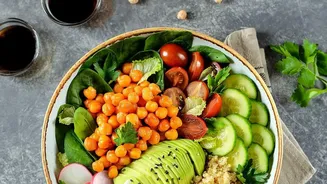
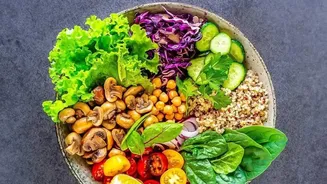
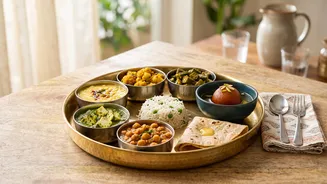
While protein and fibre are powerful on their own, they work even better as a team. This combination creates a synergistic effect that tackles hunger from multiple angles. Protein manages the hormonal signals of fullness, while fibre provides the physical volume and slows digestion. This powerful pairing helps to stabilise blood sugar levels, keeping your energy steady and preventing the crashes that send you reaching for snacks. A meal that combines both is the ultimate strategy for long-lasting satisfaction. Think of a bowl of dal (protein and fibre) with brown rice (fibre), or a quinoa salad (protein and fibre) loaded with roasted vegetables (fibre) and chickpeas (protein and fibre). This approach makes your meals more satisfying without you having to count calories.
Building a Balanced Vegetarian Plate
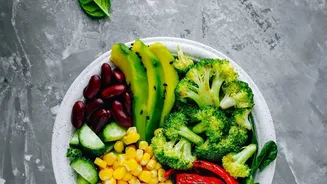
Putting this into practice is simpler than it sounds. Aim to include a source of protein and a source of fibre in every meal and snack. For breakfast, instead of plain toast, have oatmeal made with soy milk and topped with nuts and seeds. For lunch, a salad becomes far more filling when you add a cup of chickpeas or a serving of grilled paneer. Turn to snacks like roasted chana, a handful of almonds, or hummus with vegetable sticks. At dinner, ensure your plate isn't just carbohydrates. Pair your roti or rice with a generous serving of rajma, tofu stir-fry, or lentil soup. Simple swaps like using high-protein pasta or adding beans to a soup can make a significant difference.
Common Mistakes to Avoid
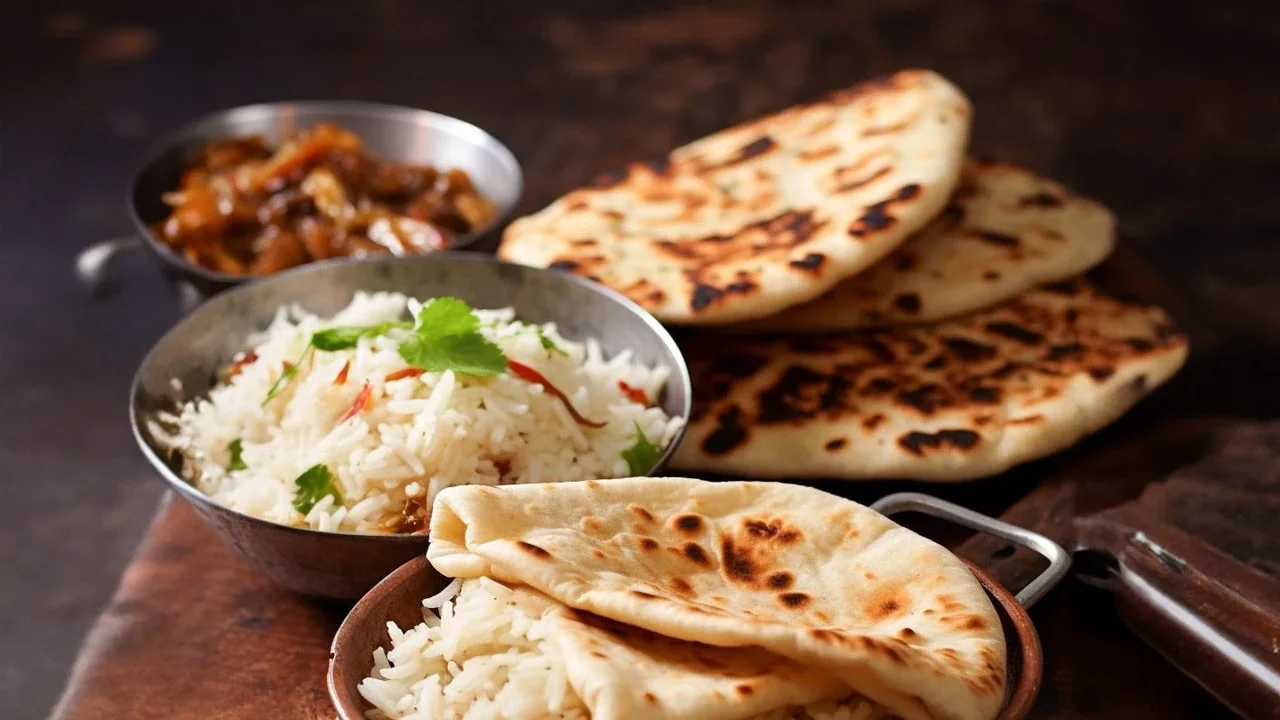
One of the most common pitfalls for new vegetarians is simply removing meat without adequately replacing the protein. This often leads to meals heavy in refined carbohydrates like white pasta or white rice, which digest quickly and can leave you feeling hungry. Another frequent mistake is over-relying on cheese as a primary protein source. While it provides protein, many cheeses are high in saturated fat and salt and can displace other nutrient-dense options. Finally, don't assume that all vegetarian-labelled products are inherently healthy. Many processed meat alternatives can be high in sodium and low in the very nutrients—protein and fibre—that you need to feel full. The goal is to build your diet around whole foods as much as possible.