





A New Eye on the Cosmos
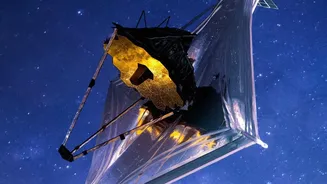
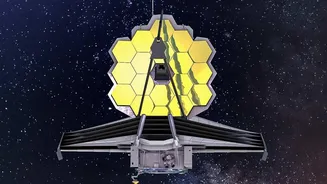
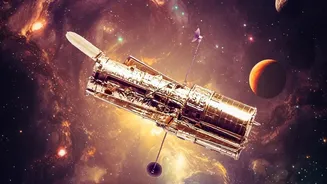
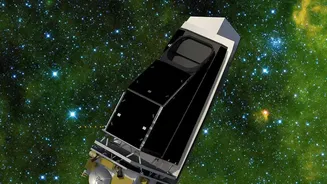
Following in the footsteps of giants like the Hubble and James Webb space telescopes, NASA's Nancy Grace Roman Space Telescope is poised to become the agency's next flagship astrophysics mission. Launched on August 30, 2026, Roman isn't designed to replace
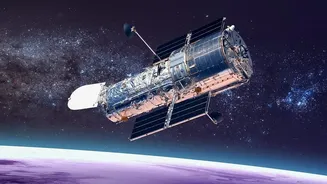
its predecessors but to complement them with a unique and powerful capability: panoramic vision. While Hubble and Webb excel at capturing incredibly deep, detailed images of small patches of the sky, Roman's prime instrument is built for breadth. It has the same size primary mirror as Hubble (2.4 meters) and a similar image sharpness, but its field of view is a staggering 100 times larger. This means in a single snapshot, Roman can capture an area of the sky that would require hundreds of individual images from Hubble. This efficiency will allow it to map huge swathes of the cosmos, creating an unparalleled atlas of stars and galaxies.
The Power of a Panoramic Camera
At the heart of this new observatory is the Wide-Field Instrument (WFI), a groundbreaking 300-megapixel camera. It is composed of 18 advanced detectors, which together can image an area of 0.28 square degrees of the sky at once. To put that in perspective, while Hubble has given us breathtaking views of our universe for over three decades, it has observed less than one percent of the sky. Roman, by contrast, will be able to survey thousands of square degrees, or about 12% of the sky, in just under a year and a half. This ability to quickly survey vast regions makes Roman a true discovery machine. It's like switching from looking at the universe through a keyhole to opening a massive bay window. This speed and scale will enable scientists to tackle cosmic mysteries that require enormous sample sizes, from the nature of dark energy to the demographics of planets across our galaxy.
Unraveling the Mystery of Dark Energy
One of Roman’s primary science goals is to investigate dark energy, the enigmatic force believed to be causing the accelerating expansion of the universe. By mapping the precise locations and shapes of hundreds of millions, or even billions, of galaxies, Roman will provide crucial data for this study. Scientists will use two main techniques. First, they will measure how galaxies are clustered together throughout cosmic history, a pattern known as baryon acoustic oscillations. Second, they will study weak gravitational lensing—the subtle way the gravity of massive objects (including dark matter) distorts the light from background galaxies. Observing these tiny distortions across millions of galaxies allows astronomers to create a detailed map of matter's distribution and track how the universe's expansion has changed over time, providing vital clues about the nature of dark energy itself.
A Galactic Census of New Worlds
Beyond studying distant galaxies, Roman's wide view is perfect for hunting exoplanets within our own Milky Way. The mission will conduct a massive survey of the crowded central region of our galaxy, searching for the tell-tale signs of planets using a technique called gravitational microlensing. This method detects planets by observing the way their gravity, combined with their host star's, magnifies the light from a more distant background star as they pass in front of it. Because this technique doesn't depend on light from the planet itself, it's particularly effective at finding smaller, rocky worlds and planets that orbit far from their star. Astronomers expect Roman’s microlensing survey to discover thousands of new exoplanets, providing a statistical census of worlds throughout the galaxy and helping us understand how common planetary systems like our own truly are.
A New Era of Big Data Astronomy
The sheer volume of information Roman will generate represents a new frontier for astronomy. The telescope is expected to produce about 1.4 terabytes of data every single day, the highest rate of any NASA astrophysics mission to date. This flood of high-quality data will be made publicly available, empowering scientists and citizen scientists around the globe to make discoveries. The mission's High-Latitude Wide-Area Survey will provide imaging and spectroscopic data on billions of objects, creating a treasure trove for studying everything from the evolution of galaxies to the structure of the cosmic web. This ability to capture both immense detail and vast cosmic landscapes ensures that Roman will not only answer many of today's pressing questions but will also undoubtedly uncover new and unexpected mysteries for future generations to explore.