





The Science of Being Sure
Before the spectacle of a rocket launch, thousands of hours are spent on the ground in a process called qualification testing. Think of it as the toughest exam a piece of hardware will ever face. Engineers deliberately push systems harder than they will ever be pushed
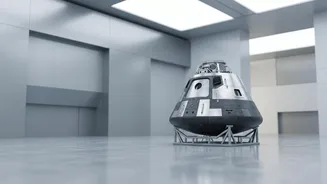
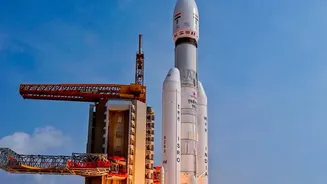
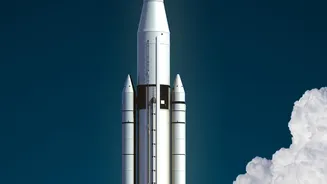
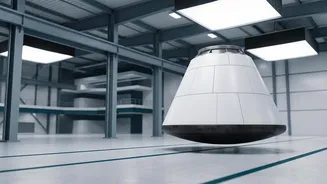
during an actual flight. The logic is simple: if a component survives extreme stress testing on Earth, it earns the right to fly in space. This methodical, behind-the-scenes work is the true foundation of mission readiness. For Gaganyaan, which aims to carry three Indian astronauts into low-Earth orbit, nothing is more important than ensuring the crew module—the capsule they will live in—is failsafe. In July 2026, ISRO completed a crucial push, successfully validating three systems that are non-negotiable for bringing the crew home safely.
Test 1: Surviving the Splashdown
A mission isn't over until the astronauts are safely out of the capsule. After re-entering the atmosphere and parachuting down, the Gaganyaan module will splash into the sea. But what if it lands upside down or tilted in rough waters? To solve this, ISRO has developed the Crew Module Up-righting System (CMUS). It’s essentially a set of flotation bags that are rapidly inflated using stored, compressed cold gas. The first of the three recent qualification tests successfully demonstrated this system. Engineers triggered the inflation, and the tests confirmed the bags deployed at the right speed and pressure to rotate the module into the correct, upright position, a critical step for ensuring the crew remains safe until recovery teams arrive.
Test 2: The Critical Cord-Cutting
Throughout its time in orbit, the Crew Module is attached to a Service Module, which provides power, propulsion, and other essential supplies. The connection is made through an umbilical cord, a lifeline carrying electrical and fluid links. However, before the Crew Module begins its fiery re-entry into Earth's atmosphere, this cord must be cut cleanly and precisely. A connector that fails to detach could be catastrophic. The second qualification test focused on this Crew Module-Service Module Connect Disconnect System (CSCDS). Using a simulated capsule, engineers tested the separation of the umbilical unit, demonstrating that it detaches without a snag and, crucially, without causing any structural damage to the crew capsule panel it's attached to. This successful test validates one of the most vital separation events in the mission profile.
Test 3: Weathering an Explosive Pop
To slow its descent from hypersonic speeds, the Gaganyaan capsule relies on a complex sequence of 10 parachutes. These parachutes are housed in a compartment protected by an Apex Cover during launch and re-entry. Just before the parachutes are needed, this cover must be jettisoned, an event triggered by a controlled explosive force. The third qualification test was designed to prove that the main Crew Module structure could withstand the powerful reaction forces from this separation event. In a ground rig, engineers applied loads approximately 1.75 times stronger than what is expected during flight. The module passed with flying colours, with all measurements confirming its structural integrity, ensuring that blowing the lid off the parachute bay won't harm the capsule it's meant to save.
A Symphony of Safety Checks
These three successful ground tests are part of a much larger, exhaustive campaign to make Gaganyaan as safe as humanly possible. They complement a host of other trials, such as the Integrated Main Parachute Airdrop Tests (IMAT), where full-scale parachute systems are dropped from aircraft to verify their deployment in real-world conditions. Furthermore, ISRO has conducted a series of abort tests, including the Pad Abort Test in 2018 and the in-flight TV-D1 mission in 2023, which validated the Crew Escape System—an ejection seat-like mechanism that pulls the entire crew capsule away from a failing rocket. Each test, whether on the ground, dropped from the air, or launched on a test rocket, adds another layer of confidence.