








A Foundation of Growth
The headline number for June 2026 is a welcome sign for India's domestic growth story. The Index of Core Industries (ICI), a key barometer of industrial and infrastructure performance, expanded by 5% year-on-year. This marks the fastest pace since January
and a significant acceleration from the 3.2% growth seen in May. The growth was largely powered by sectors central to construction and infrastructure development. Cement and electricity production both saw a robust increase of 9.8%. This data, the first to be released under a newly revised index with a 2022-23 base year, underscores the continued momentum from the government's sustained push on infrastructure projects like highways, railways, and urban development.
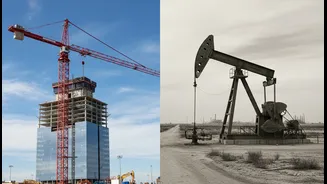
The Crude Reality
While construction-related industries thrived, the story was starkly different for the energy and petroleum complex. Sectors heavily exposed to global market volatility showed significant strain. Crude oil production fell by 4.2%, and natural gas output dropped by 7.4%. Refinery products, a measure of output from petroleum refineries, also contracted by 4.7%. This weakness highlights India's structural vulnerability to external shocks. With high import dependence, the sector's performance is directly tied to global crude prices and geopolitical events, such as the conflict and shipping disruptions in the Strait of Hormuz earlier in the year, which have created lingering cost and supply pressures.
A Tale of Two Sectors
The divergence between domestic-facing infrastructure and globally-linked energy is clear. Infrastructure growth is being propelled by internal policy and investment, creating jobs and building long-term assets. In fact, the government updated the Core Index to better capture this, adding iron ore as the ninth sector. Iron ore production surged by an impressive 43.9% in June, contributing significantly to the overall positive figure. In contrast, the petroleum sector’s struggles are largely imported. An analyst from the Bank of Baroda noted that the negative growth across crude oil, gas, and refinery products can be attributed to the dynamics of global prices and trade, including a slowdown in the export of refined products. This shows how one part of the economy can be firing on all cylinders thanks to domestic demand, while another is held back by international headwinds.
The Broader Economic Picture
This two-speed reality presents a complex challenge for policymakers. Strong infrastructure growth is fundamentally good for the economy, boosting industrial demand and improving logistics. However, the strain in the petroleum sector cannot be ignored. Higher energy import bills, like the 23% year-on-year increase seen in June's petroleum imports, widen the trade deficit. This pressure can weaken the rupee and contribute to imported inflation, eventually affecting everything from freight costs for businesses to fuel prices for consumers. For the April-to-June quarter, the core sectors collectively grew by 3.6%, a significant improvement from the 1% growth in the same period last year, but the unevenness across industries remains a key theme to watch.