







A Private Ride to Orbit
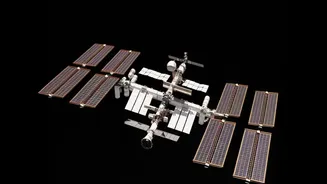
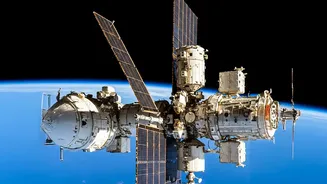
The Axiom-4 (Ax-4) mission is the fourth privately funded and operated crewed mission to the International Space Station (ISS) by the American company Axiom Space. In partnership with NASA, these missions use SpaceX's Crew Dragon spacecraft to ferry a mix
of national astronauts, researchers, and private individuals to the orbiting laboratory for stays of up to a few weeks. Unlike government-led space programs, these commercial flights open up new, faster avenues for countries and research institutions to conduct experiments in microgravity without having to build their own rockets and capsules. For India, Ax-4 represented a significant opportunity to fly experiments and an astronaut, offering a crucial precursor experience for the nation's own ambitious Gaganyaan human spaceflight program and the planned Bharatiya Antariksha Station.
An Ambitious Scientific Payload
The Defence Research and Development Organisation (DRDO), along with ISRO and other institutions, had prepared a diverse and ambitious 'menu' of experiments for the mission. This wasn't just a single project but a suite of studies aimed at understanding the effects of microgravity on various systems. The research portfolio reportedly included experiments on human physiology, like muscle degradation (myogenesis), and life support systems, such as cultivating microbes and edible plants. DRDO, which specializes in developing technologies for India's armed forces in extreme environments, has a vested interest in this research. Understanding how to create reliable life support, grow food, and protect human health in the harshness of space has direct applications for soldiers in high-altitude regions like Ladakh and for future Indian astronauts on long-duration missions.
The Unforgiving Race Against Time
So, what went wrong? The challenge wasn't the science itself, but the brutal logistics of spaceflight. Every single piece of equipment sent to the ISS must undergo a rigorous and time-consuming process of testing and certification known as flight qualification. This ensures the experiment will not only work as intended but, more importantly, poses no danger to the station or its crew. Payloads must be integrated, tested for safety, and delivered months in advance. In this case, the time simply ran out. The development and validation process for the wide range of sophisticated Indian experiments proved too compressed to meet the stringent deadlines for integration into the Ax-4 mission manifest. This is a common hurdle in the space industry, where mission timelines are notoriously rigid and delays in one component can have a cascading effect.
A Setback, Not a Dead End
While the withdrawal is undoubtedly a disappointment, it's more of a logistical setback than a scientific failure. Pulling a payload due to integration timelines is a frequent occurrence in the high-stakes, high-pressure world of space launches. The real value comes from the work that has already been done. Indian scientists and engineers successfully designed and nearly completed a complex array of space-ready experiments. This process has provided invaluable hands-on experience in the demanding procedures of preparing human-rated space hardware. The knowledge gained in coordinating between different agencies, designing for microgravity, and navigating the early stages of the flight certification process is a significant achievement in itself. This institutional knowledge is crucial and will directly benefit future missions, whether they are on another private flight or on India's own sovereign Gaganyaan spacecraft.