





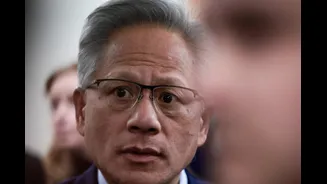
In a stunning turn of events that rocked Silicon Valley, Jensen Huang is back as the President and CEO of Nvidia. His reinstatement on November 23, just 11 days after his abrupt resignation, concludes a brief but chaotic chapter for the AI giant.
An Unprecedented Departure
The crisis
began on November 12, 2026, when Nvidia announced that its co-founder and CEO of 33 years, Jensen Huang, had resigned from all his positions, effective immediately. The departure followed reports and a personal admission from Huang of extramarital affairs, one of which involved a woman U.S. officials were reportedly concerned could be a foreign intelligence asset. The board appointed Chief Financial Officer Colette Kress as interim CEO and Harvey C. Jones as the board's first-ever chair, signaling a new era. The news sent shockwaves through the market, with Nvidia's stock plunging and wiping billions from its valuation as investors grappled with the exit of one of the tech world's most iconic founders.
The 11-Day Interlude
In the immediate aftermath of the resignation, the future seemed clear. Board Chair Harvey Jones stated during a November 17 earnings call that the board did not intend to reinstate Huang and was beginning a search for a permanent successor. However, pressure began to mount from both inside and outside the company. A chorus of high-profile tech executives publicly called for Huang's return, and Huang himself issued a statement expressing regret for his personal mistakes and saying he would be 'honored' to return if asked. The brief period was led by interim CEO Colette Kress, a long-time Nvidia executive who steered the company through the turbulent days before the board's ultimate reversal.
A Stunning Reversal
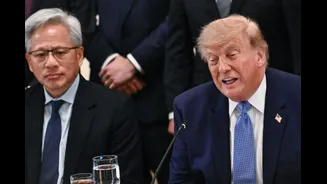
On November 23, Nvidia announced a unanimous board decision to reinstate Jensen Huang as President, CEO, and a member of the board. In its official statement, the company cited renewed discussions with Huang that satisfied the board regarding his 'candor and ability to lead'. Crucially, the statement also noted that the board had received 'input from senior levels of the United States government' and was confident that Huang’s return posed no national security risk. President Donald Trump later stated he had personally intervened and convinced the board to bring Huang back.
Why His Leadership Matters
The market's dramatic reaction—with Nvidia's stock soaring over 30% upon news of his return—underscores Huang's singular importance. Since co-founding the company at a Denny's in 1993, Huang has been the sole architect of its vision. He led the pivot from a focus on PC graphics cards to creating the Graphics Processing Unit (GPU), a technology that proved to be the engine of the modern artificial intelligence revolution. Under his uninterrupted 33-year tenure, Nvidia grew into one of the world's most valuable companies, with its hardware becoming the foundational infrastructure for AI development globally. Analysts noted the episode exposed just how much of the AI industry, and Nvidia's own governance, rested on the shoulders of one man.
What Comes Next for Nvidia
While Huang is back at the helm, some things have changed. Harvey C. Jones remains the Chair of the Board, a new position created in the wake of the crisis. Furthermore, Nvidia stated that an independent board investigation into the security concerns that preceded the resignation will continue, alongside newly established oversight committees for national security and trade compliance. The company is also creating a new Chief Compliance Officer role. Huang's reinstatement was seen by many as a necessary move to stabilize the company and the broader AI ecosystem, but it also raises new questions about corporate governance when a founder becomes inseparable from their company's identity and success.