
Different Families, Different Flavours
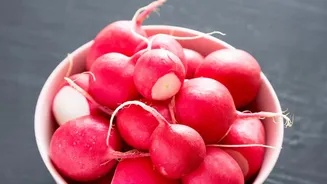
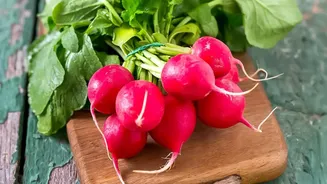
The most fundamental difference lies in their botanical origins. Radishes, known scientifically as Raphanus sativus, belong to the Brassicaceae family, making them relatives of mustard, cabbage, and kale. This explains their characteristic sharp, peppery
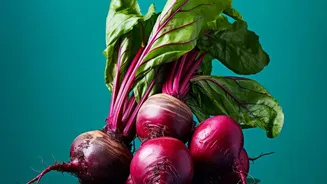
flavour. Beetroots (Beta vulgaris) are part of the Amaranthaceae family, alongside spinach and quinoa. This lineage gives beets their distinctly sweet and earthy taste. So, while they may look similar in a market stall, their family trees are completely separate, dictating their core flavours.
A Nutritional Divide
Nutritionally, they offer very different benefits. Radishes are significantly lower in calories and carbohydrates. They are an excellent source of Vitamin C, which is a powerful antioxidant. Beetroots, on the other hand, are nutritional powerhouses in other areas. They are packed with folate (a B vitamin crucial for cell growth), manganese, potassium, and iron. Beets are also noted for containing nitrates and betalains, compounds linked to improved blood flow and reduced inflammation. While both are healthy, beetroot is generally richer in most vitamins and minerals, with the notable exception of Vitamin C and calcium, where radish has the edge.
The Impact of Cooking
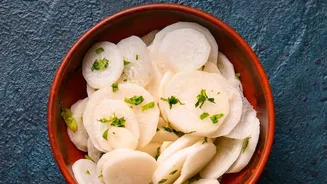
How these vegetables react to heat is perhaps the biggest reason they are not interchangeable in the kitchen. Radishes are most often eaten raw, sliced into salads or used as a crunchy garnish, like in a classic kachumber. When cooked, their peppery bite mellows considerably, turning into a surprisingly subtle, almost buttery flavour. Beetroots are versatile but offer a different experience. Roasting or boiling them concentrates their natural sugars, making them even sweeter and deepening their earthy notes. Using beetroot in a recipe that calls for the crisp, spicy bite of a raw radish—or vice versa—would lead to a completely different taste and texture profile, likely an undesirable one.
Best Uses in the Indian Kitchen
In Indian cuisine, each vegetable has its designated role. Radish, or mooli, is the star of Mooli Paratha, where its sharp flavour is balanced by spices and dough. It's also pickled (Mooli ka Achar) or grated into raitas and salads for a fresh, pungent crunch. Beetroot, or chukandar, is beloved for its vibrant colour and sweetness. It's the base for comforting thorans and poriyals (stir-fries) in South India, blended into nutrient-rich juices, or used to make colourful and flavourful raitas and sabzis. While some creative recipes might combine them in a salad or a mixed vegetable dish, they are rarely used as a direct substitute for one another because their culinary jobs are so different.