





Understanding Coordination and Footwork
Before we can compare, it's important to understand what we mean by 'coordination'. In physical fitness, coordination is the body's ability to move smoothly and efficiently. It's the seamless teamwork between your brain, nervous system, and muscles. Good
coordination allows you to control the speed, rhythm, and direction of your movements. Footwork is a direct expression of this coordination, dictating how well you can place your feet to maintain balance, generate power, and change direction. When athletes talk about having 'quick feet', they're not just talking about speed, but the controlled, precise, and efficient movement that stems from excellent neuromuscular coordination. This skill is crucial not just in sports but in everyday life, helping to prevent falls and improve overall stability.
Jump Rope: The Master of Rhythmic Precision
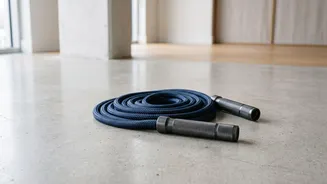
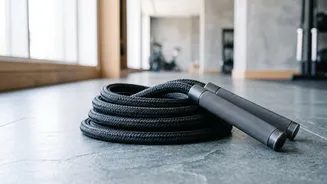
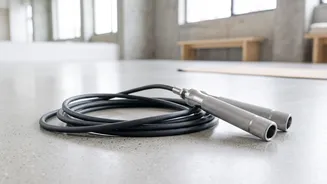
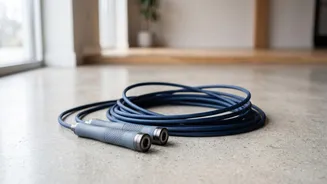
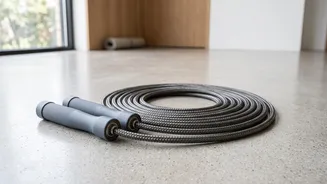
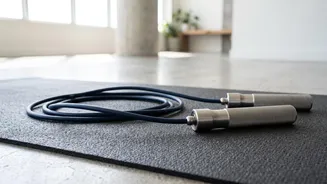
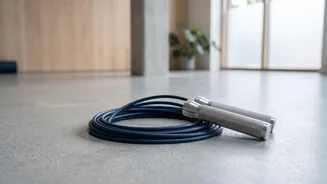
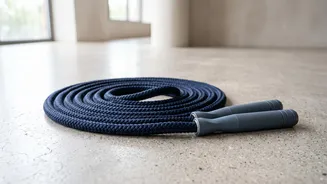
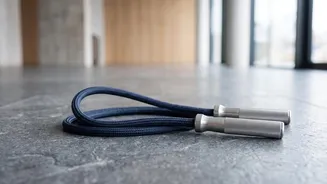
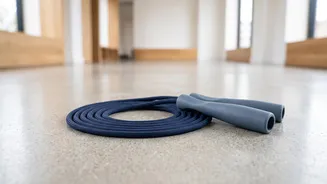
Jumping rope is a masterclass in developing fine-tuned, rhythmic coordination in a controlled environment. The exercise demands a constant, precise relationship between your hands, which control the rope, and your feet, which must clear it at the exact right moment. This creates a predictable rhythm that trains your body to be light on its feet, minimizing ground contact time and improving the elastic reactivity of your lower leg muscles. Athletes in sports like boxing and basketball rely on jump rope to develop this exact kind of rapid, controlled footwork and agility. It enhances your body's ability to synchronize movements, improve balance, and sharpen reaction time, all within a very small space. The focus is on vertical, repetitive precision, teaching your feet to be quick, consistent, and incredibly controlled.
Running: The Expert in Adaptive Propulsion
Running, on the other hand, builds a different kind of coordination, one based on forward propulsion and adapting to a constantly changing environment. While it may seem simpler than jumping rope, efficient running requires a high degree of intermuscular coordination, where opposing muscle groups work in harmony to produce a smooth, powerful stride. Unlike the stationary nature of jumping rope, running forces your body to manage momentum and balance while moving forward. It trains your footwork to adapt to uneven terrain, inclines, and declines, developing a more robust, real-world sense of stability. The coordination required for running is less about tight, rhythmic hopping and more about controlling a larger range of motion in the hips and legs to propel the body forward efficiently and safely.
The Context: It’s About Different Goals
So, which is better? The headline's call for 'careful context' is key. It's not a question of which is superior overall, but which is better for a specific coordination goal. If your goal is to develop lightning-fast, rhythmic footwork, improve your timing, and enhance your ability to make tiny, precise adjustments while staying in one place, jump rope is arguably superior. It directly trains the neuromuscular pathways responsible for quick, light steps. If your goal is to improve your coordination while moving through space, manage your stride over distance, and build the endurance-based coordination needed for most field and track sports, running is more specific and effective. Running improves your body's ability to maintain form and efficiency over extended periods, a different but equally valuable skill.
A Complete Approach: Using Both
Ultimately, the smartest athletes don't choose one over the other; they integrate both. Cross-training with both activities provides a more complete athletic foundation. Running builds the cardiovascular base and locomotive control, while jumping rope fine tunes the foot speed, agility, and lower leg resilience that can make a runner more efficient and less prone to injury. By jumping rope than runner can improve calf strength and the elastic response of their Achilles tendon leading to better running economy. Conversely than jump rope enthusiast can use running to build the foundational endurance needed to sustain longer more intense skipping sessions. They are not rival exercises but complementary tools in the pursuit of well rounded fitness and superior movement control.