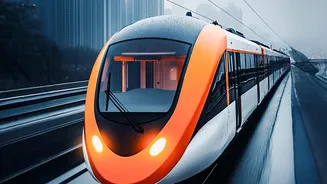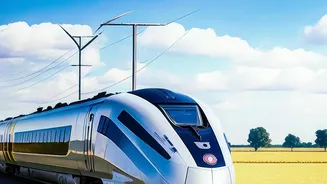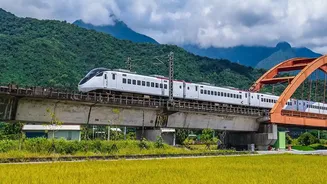




Understanding the Northern Corridor
India's high-speed rail dream, which began with the Mumbai-Ahmedabad line, is expanding with several new proposed routes. Among the most ambitious is the Northern Corridor, designed to connect Delhi with the eastern parts of the country. The initial plan
consisted of two main sections: Delhi to the holy city of Varanasi, and from there to Siliguri in West Bengal. The route is planned to pass through major hubs in Uttar Pradesh and Bihar, including Agra, Lucknow, Prayagraj, and Patna. Recent announcements confirm that the vision for this corridor has grown, with Prime Minister Narendra Modi giving his approval for the project. While still in the planning and detailed project report (DPR) phase, this corridor represents a massive infrastructure undertaking aimed at slashing travel times between key economic and cultural centres.
A Strategic Extension to Guwahati
The latest and perhaps most significant development is the decision to extend the Northern Corridor beyond Siliguri all the way to Guwahati, Assam's largest city. This move came after a formal request from Assam's Chief Minister, Himanta Biswa Sarma, who argued for the strategic importance of including the Northeast in the high-speed network. The extension was announced by Union Railway Minister Ashwini Vaishnaw in late October 2026, marking a major policy decision to integrate the region more deeply with the rest of the country. This brings the prospect of a bullet train journey from Delhi to Guwahati, which could take less than eight hours, into the realm of possibility. For a journey that currently takes a significant amount of time by conventional rail, this represents a revolutionary change in mobility.
An Economic Catalyst for the Northeast
Connecting Guwahati to the bullet train network is about more than just speed; it's a strategic move to unlock the economic potential of the entire Northeast. Improved connectivity is expected to act as a powerful engine for growth, benefiting trade, tourism, and industry. By making travel faster and more convenient, the corridor could attract new investment, support the development of high-tech industries, and make it easier for goods and skilled professionals to move between the Northeast and major economic hubs like Delhi. Officials believe the project will create numerous opportunities for small-scale industries, local artisans, and middle-income families, fostering a more integrated national economy. Studies on high-speed rail in other countries have shown a positive correlation with GDP growth in connected regions, a benefit India hopes to replicate.
Aligning with the 'Act East' Policy
The Guwahati extension aligns perfectly with India's 'Act East' policy, which aims to strengthen economic and strategic ties with Southeast Asian nations. The Northeast is geographically positioned as India's gateway to the east, and robust infrastructure is critical to the success of this policy. By developing a high-speed rail link that passes through the strategically sensitive 'Chicken Neck' corridor to reach Assam, the project enhances national integration and security. This corridor is part of a broader push to improve connectivity in the region through various projects, including highways and rail links with neighbouring countries like Bangladesh and Myanmar. A modern, efficient transport network strengthens India's position as a regional leader and transforms connectivity corridors into corridors of economic cooperation.
The Long Road Ahead
Despite the excitement, the journey to a fully operational bullet train to Guwahati is a long and complex one. The project remains in its initial phases, with detailed project reports, final route alignments, and funding models yet to be finalised. High-speed rail projects are incredibly capital-intensive and face numerous hurdles, including land acquisition, environmental clearances, and the challenge of building on difficult terrain. While the government has signalled strong intent, with the Railway Minister stating the project will be built by India's youth and leverage domestic manufacturing, construction on this scale takes years to complete. The focus for now is on meticulous planning to ensure the project, once started, proceeds efficiently, learning from the experiences of the Mumbai-Ahmedabad corridor.