



A Messenger from the Moon
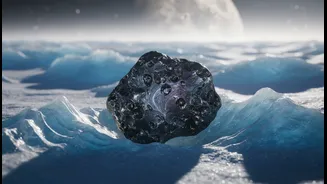
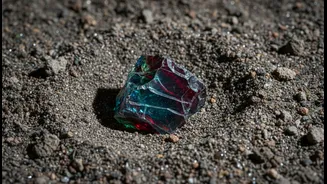
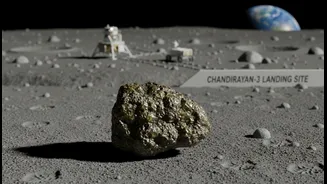
The story begins over four decades ago, not in space, but in the icy expanse of Antarctica. During the 1981-1982 expedition, scientists in the Allan Hills discovered a peculiar rock. This meteorite, named ALHA 81005, was special because it was the very
first rock found on Earth to be scientifically confirmed as originating from the Moon. Blasted off the lunar surface by an ancient asteroid impact, it travelled through space before landing on our planet, carrying with it the secrets of its origin. For years, it was a unique sample of the Moon available for study, but its exact point of origin remained a mystery.
Chandrayaan-3 Provides the Crucial Clue
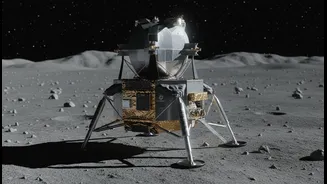
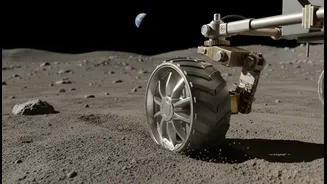
Fast forward to August 2023, when the Chandrayaan-3 lander made its historic touchdown near the lunar south pole. The Pragyan rover, equipped with an Alpha Particle X-ray Spectrometer (APXS), began analysing the elemental composition of the lunar soil at its landing site, named Shiv Shakti Statio. Scientists at the Physical Research Laboratory (PRL) in Ahmedabad then undertook a comprehensive analysis, comparing the rover's on-site data with the compositions of 66 known lunar meteorites on Earth. The result was a stunning match: the soil at Shiv Shakti Statio had a geochemical signature that closely resembled the meteorite ALHA 81005.
A Shared Chemical Fingerprint
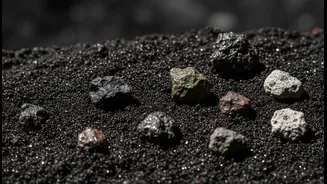
The connection wasn't a coincidence. Both the lunar soil and the meteorite showed a similar, and quite rare, composition. They had lower levels of aluminium but were significantly richer in iron and magnesium compared to typical lunar highlands. Specifically, the combined iron and magnesium oxide content at the landing site was about 14.4%, remarkably close to the meteorite's 13.7%, and nearly double the average for highland regions. ISRO has clarified that this doesn't mean the meteorite came from the exact spot where the rover landed. Rather, it indicates that both are samples of the same type of magnesium-rich lunar crust, a geological province that was previously known mostly through samples with no known origin point.
Rewriting the Moon's Early History
This discovery does more than just solve a 40-year-old meteorite mystery; it deepens our understanding of how the Moon itself was formed. The high magnesium content supports the 'Lunar Magma Ocean' hypothesis—the idea that the Moon was once covered in a sea of molten rock. As this ocean cooled, lighter minerals floated to form the upper crust, while heavier, magnesium-rich minerals sank. The soil at Shiv Shakti Statio appears to be a mix, containing not just surface material but also fragments of these deeper, magnesium-rich rocks. Scientists believe this material was excavated from deep within the Moon's crust and scattered across the surface by the massive impact that created the South Pole-Aitken basin, one of the largest craters in our solar system, located about 350 km from the landing site.
The Lasting Legacy of Chandrayaan-3
This study is among the first to directly connect in-situ measurements on the Moon with the extensive library of lunar meteorites on Earth. It showcases the immense long-term value of India's space exploration program. By providing 'ground truth' from a specific, previously unexplored location, Chandrayaan-3 allows scientists to contextualise decades of meteorite research. It effectively gives a return address to a piece of the Moon that fell to Earth long ago. This new understanding helps refine our models of the Moon’s violent geological past and its evolution, demonstrating how a single mission can continue to deliver profound scientific insights long after its operational phase has ended.