
The 2027 Milestone
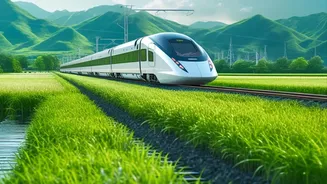
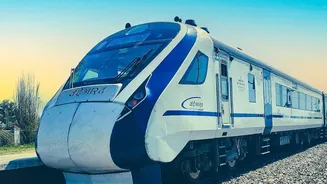
Union Railway Minister Ashwini Vaishnaw has announced that India's first bullet train will begin trial runs by May or June of 2027. The first services are slated to launch on the Surat-Bilimora section in Gujarat, with a full commercial run expected to follow
two to four months after successful testing. This phased rollout is a strategic approach to ensure all systems are perfectly integrated and safe before the entire 508-kilometre corridor connecting Mumbai and Ahmedabad is fully operational. The goal is to have the first section running for the public by August 2027, a symbolic milestone for the country's infrastructure development.
Gujarat's Rapid Progress
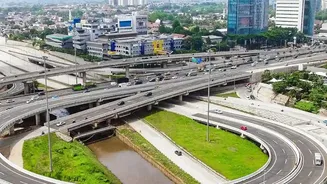
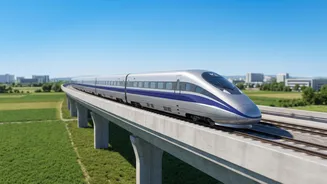
The Gujarat portion of the high-speed corridor has seen remarkable progress, serving as the backbone of the project's current timeline. As of late 2026, construction of the viaduct, the elevated structure on which tracks are laid, has been completed over a significant portion of the route. Civil works on the 97-kilometre stretch between Surat and Vapi are finished, including the construction of crucial river bridges. Stations in key cities like Ahmedabad, Vadodara, Surat, and Bharuch are taking shape, with structural work complete and track-laying activities now in full swing. This advanced stage of completion in Gujarat is why the initial trial runs are planned there, providing a real-world testing ground for the Shinkansen technology adapted for India.
Maharashtra Gaining Speed
While the project initially faced significant delays in Maharashtra, primarily due to challenges in land acquisition, work is now proceeding at an accelerated pace. After resolving these hurdles, the state has caught up, with pier construction crossing the 100-kilometre mark and viaduct girders being installed. One of the most complex engineering feats of the entire project is the construction of a 21-kilometre tunnel, which includes India's first undersea rail tunnel under Thane Creek. The commencement of work on this tunnel signifies a major achievement, overcoming both technical and logistical challenges. With three elevated stations also under construction in Thane, Virar, and Boisar, the Maharashtra section is now a hive of activity, crucial for connecting the corridor to its final destination in Mumbai.
What the 'Trial Run' Involves
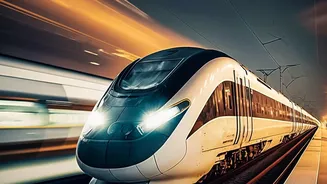
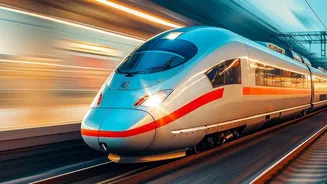
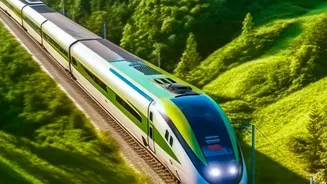
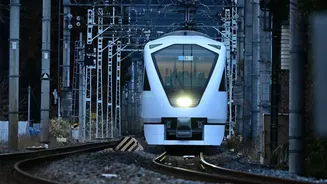
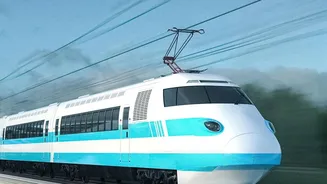
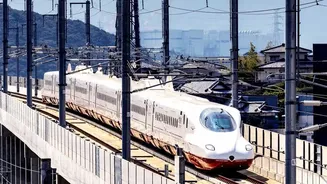
A 'trial run' is more than just running a train on the tracks; it is a comprehensive testing phase for the entire high-speed system. The trains, based on Japan's famous Shinkansen E5 series, will undergo extensive testing to check their performance, safety, and integration with Indian conditions. This includes evaluating the new J-Slab ballastless track system, which is being used for the first time in India and is designed for high-speed stability. The advanced signalling systems and the 2x25 kV overhead power infrastructure will also be rigorously tested. This phase is critical for ensuring that every component, from the trainsets to the track and power supply, works in perfect harmony to deliver a safe and reliable service at speeds of up to 320 km/h.