








The Viral Dream: A Free Ride to the Emerald Isle?
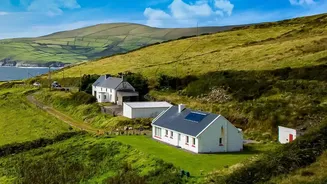
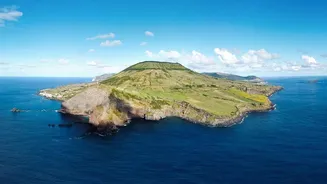
It’s a fantasy tailored for the social media age: Ireland is paying people to populate its stunning, remote offshore islands. Headlines suggest a generous government is handing out cash to anyone willing to embrace a quieter, more scenic way of life on islands like
the Arans or Clare Island. The ‘Our Living Islands’ policy, launched in 2023, is indeed real and aims to revitalise the dwindling populations of around 23 inhabited offshore islands. These communities, integral to Ireland's cultural fabric, have seen younger generations move to the mainland, leaving their future at risk. The government wants to reverse this trend by making island life more sustainable. The part of the plan that captured global attention was the promise of a substantial grant, which many interpreted as a simple payment for relocating. But as with most things that sound too good to be true, the devil is in the details.
The Reality: It's a Renovation Grant, Not Relocation Cash
The €84,000 figure is not a welcome-to-the-island cheque. It is the maximum amount available under the Vacant Property Refurbishment Grant for a property on a qualifying island. Specifically, it’s a reimbursement for renovation costs. You must first buy a qualifying property yourself. The money is paid out after you have completed the work and submitted receipts. The grant is tiered: up to €60,000 for a vacant property and the higher €84,000 for a home that is officially derelict and structurally unsound. This is a 20% 'island uplift' on the standard grants available on the mainland, acknowledging the higher costs of construction in remote locations. The funds are strictly for refurbishment—things like structural repairs, re-wiring, and new windows—not for purchasing the property or for cosmetic updates.
The Conditions: Not Everyone Qualifies
The hurdles don't stop there. To be eligible, the property you buy must have been built before 2008 and have been vacant for at least two years. You have to prove this with documentation like old utility bills. Once renovated, you must commit to living in the house as your principal private residence or rent it out on a long-term basis. Holiday homes and short-term lets are explicitly excluded. If you sell the home or cease to use it as your main residence within 10 years, you may have to repay a portion of the grant. Furthermore, for international applicants, this scheme is not an immigration path. Non-EU citizens must independently secure the right to live in Ireland through a work permit, visa, or other means before they can even consider applying for the grant. The grant is tied to the property, not the person, and offers no residency rights whatsoever.
The Real Cost: Is It Still a Good Deal?
Even with the grant, this is not a low-cost venture. Applicants must front all the money for both the property purchase and the entire renovation, which can easily exceed the grant amount, especially for a derelict building. Renovating on an island brings logistical challenges and higher costs for materials and labour. While the policy is a genuine effort to support these communities, uptake has been modest. As of early 2025, only 29 applications had been received across all eligible islands, with 20 approved. This suggests the financial and practical barriers are significant. The ‘Our Living Islands’ policy is a comprehensive, 10-year strategy that also includes investments in infrastructure, healthcare, and high-speed broadband to make island life more viable. The grant is just one piece of a much larger puzzle.