

An Aging Power Grid in Space
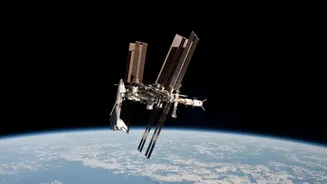
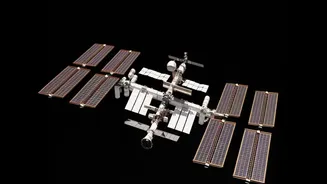
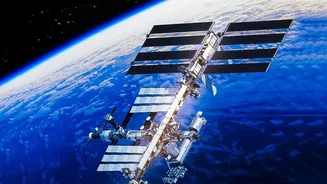
The International Space Station has been continuously inhabited since November 2000, relying on eight massive solar array wings to power its life support, computers, and countless scientific experiments. These original arrays, each spanning nearly as long
as a football field, have served the station well for over two decades. However, after years of exposure to the harsh environment of space, their power output has naturally degraded. At the same time, the demand for electricity has only grown, with more sophisticated research and more visiting spacecraft than ever before. To ensure the orbiting laboratory could continue its mission and support future activities, a significant power boost was needed.
The i-ROSA Solution
The answer was not to replace the old arrays—a complex and risky undertaking—but to augment them. NASA and its partners developed the ISS Roll-Out Solar Array, or i-ROSA. These are compact, flexible solar panels that are stowed like a rolled-up mat for launch. Once in position, they use the stored strain energy in their carbon composite booms to unroll themselves without the need for motors. Despite being smaller than their predecessors, the new i-ROSA panels are far more efficient, generating more power from a smaller surface area. The plan was to install eight new i-ROSAs over a portion of the existing arrays, giving the station a much-needed electrical reinforcement.
A Marathon of Spacewalks
Installing the eight i-ROSA units was a monumental task that began in June 2021 and concluded in November 2026. The project required a carefully choreographed series of 18 spacewalks by multiple astronaut crews to prepare the electrical channels and mount the new hardware. The final installation was completed on November 5, 2026, by NASA astronaut Anil Menon and Canadian Space Agency astronaut Joshua Kutryk. During a spacewalk that lasted nearly seven hours, they bolted the eighth and final array into place, completing the five-year upgrade program. The entire campaign highlighted the incredible complexity and human skill involved in maintaining and modernizing our home in orbit.
Powering a New Era of Discovery
With all eight i-ROSAs installed and unfurled, the station's power generation capacity has increased from about 160 kilowatts to 215 kilowatts—a boost of roughly 30 percent. This additional electricity is crucial for several reasons. It ensures the ISS has ample power to support its life-support systems and daily operations through its planned retirement around 2030. More importantly, it powers the next generation of scientific research, allowing for more complex experiments that could lead to breakthroughs in medicine, materials science, and more. This upgrade not only secures the station's legacy but also provides a stable platform for the growing commercial economy in low-Earth orbit, paving the way for future private space stations and missions.