



A Sign of the Times
High in the Chamoli district of Uttarakhand, just a few kilometres from the sacred Badrinath temple, a significant change has taken place. A signboard that for years famously marked Mana as the ‘Last Indian Village’ before the Indo-Tibetan border has been
officially replaced. The new sign, installed by the Border Roads Organisation (BRO), now proudly proclaims Mana as the ‘First Indian Village’. This change follows a statement made by Prime Minister Narendra Modi during a visit in October 2022, where he asserted that border villages are not the country's last outposts but its first sentinels. “For me, every village at the border is the first village of the country,” he declared, setting in motion a shift in perspective that has now been made concrete.
More Than Just Words
This rebranding is far more than a simple semantic switch. It is a deliberate move to reshape the national narrative around border communities. For years, the ‘last village’ tag, while a popular curiosity for tourists, carried an underlying tone of remoteness and finality. The new ‘first village’ designation aims to counter this by framing these areas as the starting point of India’s sovereignty and cultural landscape. This initiative is part of the central government’s ‘Vibrant Villages Programme’, a scheme designed to foster comprehensive development in border areas across states like Uttarakhand, Himachal Pradesh, and Arunachal Pradesh. The goal is to improve the quality of life, boost tourism, and encourage residents to remain in these strategic locations, thereby strengthening the nation's frontiers.
A Village Steeped in Legend
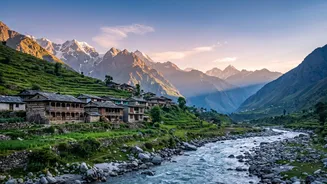
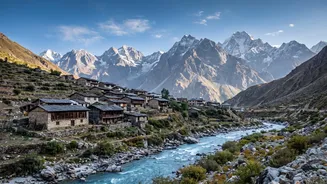
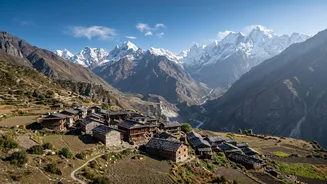
The choice of Mana for this symbolic gesture is no accident. The village, situated at an altitude of about 3,200 metres, holds immense significance in Hindu mythology. It is believed to be a key location in the epic Mahabharata. Legend holds that the Pandava brothers passed through Mana on their final journey to heaven. One of the village's most famous landmarks is the Bheem Pul, a natural rock bridge said to have been placed over the roaring Saraswati River by Bheema to help Draupadi cross. Furthermore, the village is home to Vyas Gufa and Ganesh Gufa, caves where it is believed that the sage Ved Vyas composed the Mahabharata and Lord Ganesha transcribed it. This deep mythological connection makes Mana not just a border settlement, but a living cultural and spiritual landmark.
Life at the First Frontier
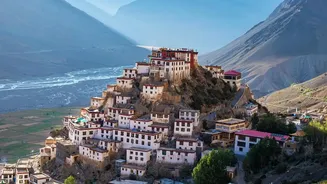
Home to the Bhotiya community, Mana has a rich history as part of an ancient trade route with Tibet. The community has traditionally practiced trans-Himalayan trade, and its unique culture is reflected in its stone houses, woollen crafts, and resilient way of life. For the residents and the thousands of pilgrims and tourists who visit annually, the new designation reinforces a sense of pride. While shops and tea stalls once playfully used the ‘last village’ moniker to attract customers, the shift to ‘first village’ aligns with a national sentiment of celebrating and integrating these remote but vital communities. The new label acts as a powerful reminder that these villages are not at the edge of the nation, but at its very forefront.