





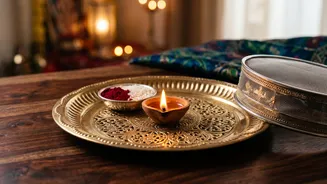
A Fast of Love and Devotion
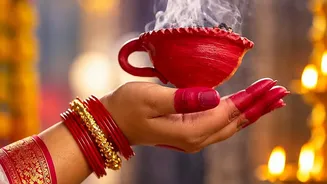
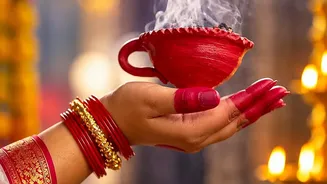
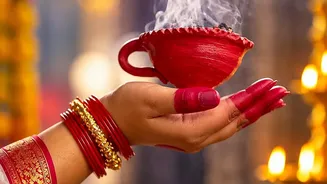
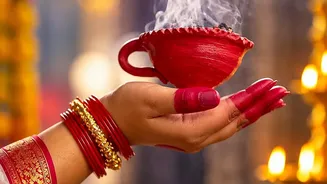
Karwa Chauth is a festival celebrated predominantly in Northern India, where married women observe a strict, waterless fast for the longevity and well-being of their husbands. The name itself holds the key to its rituals: 'Karwa' refers to the earthen
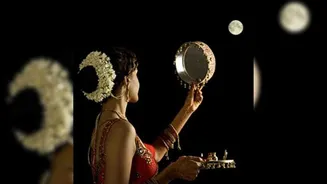
pot used for prayer offerings, and 'Chauth' means 'fourth', as the festival falls on the fourth day of the dark fortnight in the Hindu month of Kartik. The day begins before sunrise with a meal called 'Sargi', traditionally given by a mother-in-law. From that point on, women abstain from all food and water until they sight the moon in the evening, breaking the fast only after offering prayers to it.
The Legend of Queen Veeravati
The most popular story recited during Karwa Chauth is that of the beautiful Queen Veeravati. She was the only sister to seven loving brothers. On her first Karwa Chauth, she observed the strict fast at her parents' home but grew faint with hunger and thirst as evening approached. Seeing their sister's distress, her brothers couldn't bear it. They devised a trick, creating an illusion of a moon by holding a mirror or a sieve with a lamp behind a pipal tree. Mistaking the glow for the moon, Veeravati broke her fast. Immediately, she received word that her husband, the king, was dead. Heartbroken, she began the journey to her husband's palace and met Goddess Parvati on the way. The goddess explained the deception and advised her to re-observe the fast with absolute devotion. Veeravati did so, and upon its completion, Yama, the god of death, was compelled to restore her husband's life.
Rituals Rooted in the Tale
Veeravati's story is deeply woven into the festival's modern rituals. The practice of listening to the Karwa Chauth 'katha' or story during the evening puja is central to the observance, with women gathering to hear the tale. The use of a sieve, or 'chhalni', to view the moon before looking at one's husband is also linked to the legend. It serves as a reminder of the queen's deception and reinforces the importance of waiting for the true moon. The entire ritual underscores the themes of patience, devotion, and the faith that one's sincere sacrifice will be rewarded. The fast is not just about abstaining from food but about the spiritual strength and unwavering love that Veeravati's story represents.
Other Foundational Narratives
While Veeravati's tale is prominent, other legends also enrich the tradition. One story tells of a devoted wife named Karva, whose husband was seized by a crocodile. Her spiritual power was so immense that she bound the crocodile with cotton thread and confronted Yama, the god of death, threatening to curse him unless he saved her husband and punished the creature. Afraid of a pativrata (devoted wife's) curse, Yama relented. Another significant connection comes from the Mahabharata. When the Pandavas were facing immense hardship, Draupadi sought help from Lord Krishna. He advised her to observe the fast of Karwa Chauth, just as Goddess Parvati had done in a similar situation, which ultimately led to the Pandavas overcoming their troubles.