


A Star's Explosive Finale
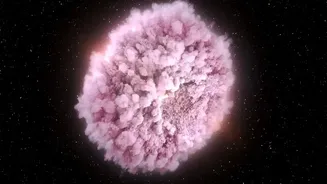
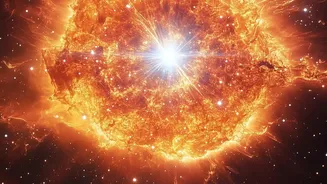
Imagine a star many times more massive than our Sun. For millions of years, it has been a furious engine of nuclear fusion. But eventually, it runs out of fuel. Without the outward push of fusion, gravity wins. The star’s core collapses in on itself in a fraction
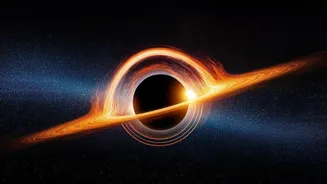
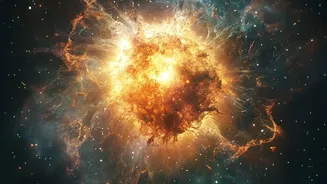
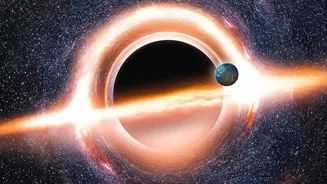
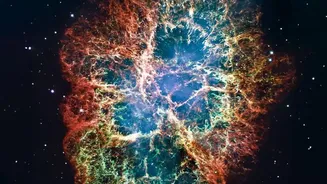
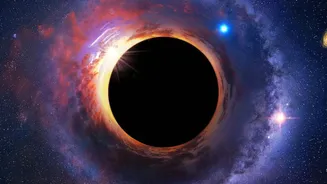
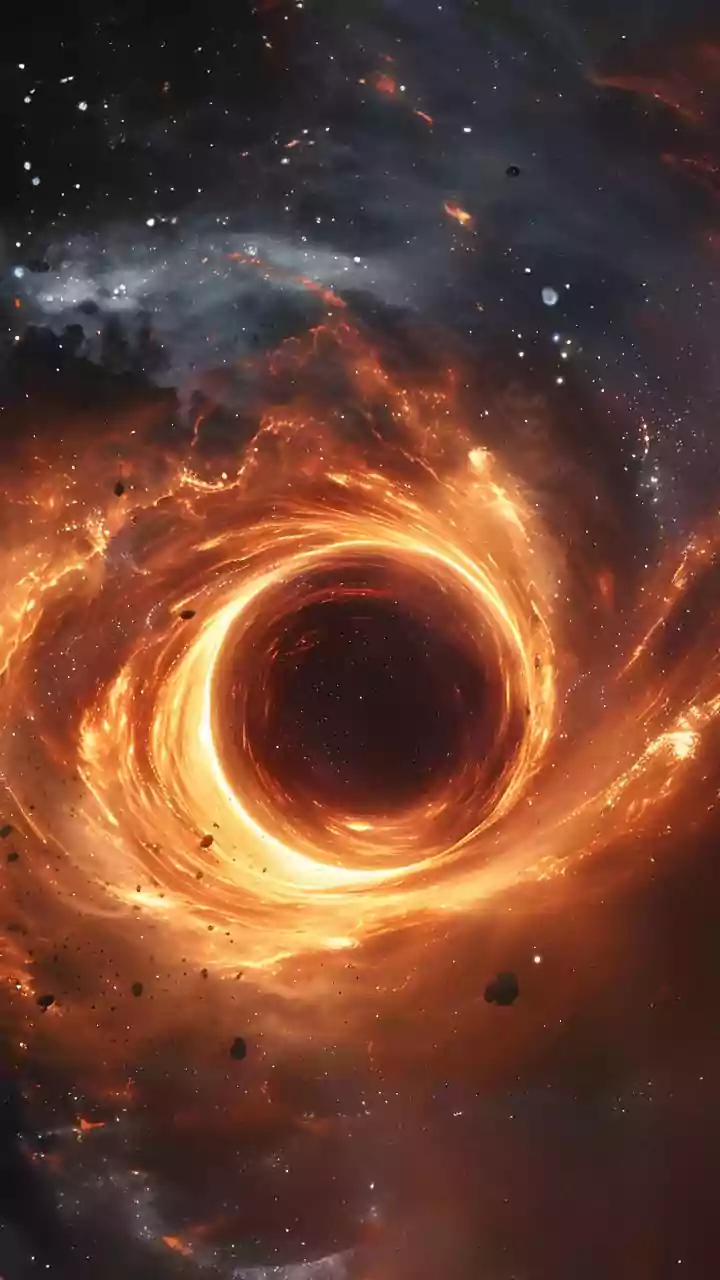
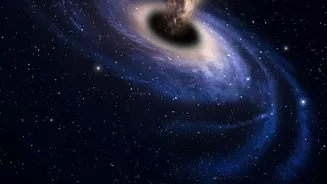
of a second. This catastrophic event, known as a core-collapse supernova, is one of the most violent in the cosmos. In this intense environment, protons and electrons are crushed together to form neutrons, releasing a biblical flood of particles called neutrinos. For decades, scientists have believed these neutrinos are key to what happens next. They carry away about 99% of the collapse energy, and if they deposit enough of that energy into the star's outer layers, they can power a massive explosion, leaving behind a dense neutron star. If not, the collapse continues unabated, and a black hole is born.
'The Ghost Particle' with an Identity Crisis
Neutrinos are often called 'ghost particles' for good reason. They are almost massless, have no electric charge, and barely interact with other matter. Trillions pass through your body every second without a trace. But what they lack in individual impact, they make up for in sheer numbers during a supernova. A crucial and strange property of neutrinos is that they come in three types, or 'flavors': electron, muon, and tau. Even stranger, they can spontaneously change from one flavor to another as they travel, a quantum mechanical phenomenon called neutrino oscillation. For a long time, astrophysicists thought this flavor-swapping was a minor detail in the chaos of a supernova. But new research suggests it might be the main event.
The Tipping Point for a Black Hole
A recent study led by researchers at the University of Copenhagen has turned this old assumption on its head. Their work suggests that as neutrinos are churned out in the ultra-dense core of a dying star, they are so crowded that they begin to interact with each other, causing rapid flavor changes. This matters because different flavors interact with the star's matter in different ways. According to the new simulations, this flavor conversion can make the neutrinos less effective at reheating the star's outer layers and driving an explosion. As a result, more stars that were expected to go supernova might 'fail' and instead collapse directly into black holes. This effect was particularly strong for stars between 16 and 30 times the mass of our sun, a range that scientists thought would reliably explode. This could help solve a long-standing cosmic mystery: why astronomers observe fewer supernovae than our theories predict.
Why We Need Better (and Bigger) Simulations
The headline's mention of 'more realistic 3D simulations' is not just a technicality; it's the frontier of this entire field. A star's collapse is not a neat, symmetrical event. It's a turbulent, three-dimensional chaos of roiling gas and energy. Early simulations, often done in one or two dimensions to save on computational costs, could not capture this complexity. They would often show explosions fizzling out when they should have succeeded. Incorporating the complex physics of neutrino flavor-swapping into already demanding 3D models is an enormous challenge. The recent breakthrough study used 195 simulations to spot the pattern, but these were still simplified models. To truly confirm this theory, researchers need to run full 3D simulations that model the entire process, from the core collapse to the final explosion or black hole formation, all while accounting for the bizarre quantum behaviour of neutrinos. This requires next-generation supercomputers and even more sophisticated codes.