


The Legend of the Manual F1
To understand the excitement, you have to go back to the 1990s. The McLaren F1 wasn't just a car; it was a statement. Conceived by visionary designer Gordon Murray, it was an uncompromising pursuit of the ultimate driving machine. At its heart were three
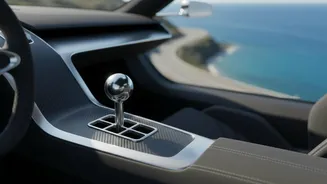
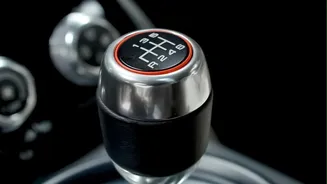
key elements: a central driving position, a naturally aspirated BMW V12 engine, and a bespoke six-speed manual transmission. In an era before paddle shifters became the norm, Murray insisted on a manual because he believed it offered the purest connection between driver and car. Changing gears in an F1 wasn't an automated suggestion; it was a deliberate, mechanical act that demanded skill and rewarded with unparalleled involvement. This focus on an analogue experience cemented the F1's status not just as a performance benchmark, but as a high-water mark for driver-centric design.
The Rise of the Dual-Clutch
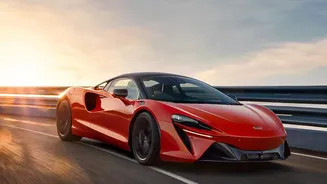
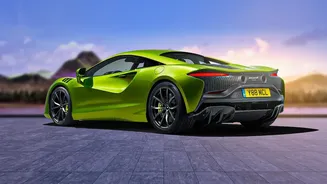
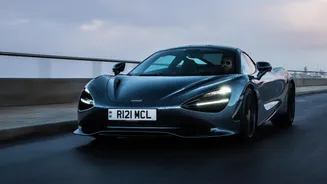
In the years since the F1 ended its production run in 1998, the hypercar landscape has transformed dramatically. The manual gearbox has been almost entirely supplanted by dual-clutch transmissions (DCTs). The reason is simple: computers shift faster than humans. Modern McLarens, from the 720S to the Artura and the flagship W1, all use automated transmissions to deliver staggering acceleration and lap times. This technological march has been relentless, prioritizing objective performance metrics over the subjective feeling of driver engagement. For a company like McLaren, which has built its modern brand on the relentless pursuit of speed and cutting-edge technology, looking backward seems almost counterintuitive. Yet, the market is beginning to show a powerful appetite for nostalgia and tactile sensations.
Whispers of the P50
This is where the unconfirmed P50 enters the frame. According to recent but unverified reports, McLaren is developing an ultra-exclusive, limited-run model that could feature a manual transmission. The project, supposedly codenamed P50, is rumored to be positioned above the current W1 flagship, with a price tag to match its exclusivity. Sources suggest a potential reveal could happen during Monterey Car Week, a prime location for showcasing such a halo product. While McLaren has not confirmed the existence of the P50, the very idea marks a potential philosophical shift for the company—a recognition that for some elite customers, the experience of driving is more valuable than the raw numbers.
The Purist Precedent
McLaren wouldn't be venturing into uncharted territory. In a fascinating twist, the F1's original designer, Gordon Murray, has already proven the business case for analogue hypercars. His own company, Gordon Murray Automotive (GMA), has launched the T.50 and T.33 supercars to immense acclaim. Both cars are spiritual successors to the F1, sharing its focus on light weight, a high-revving V12, and, crucially, a standard H-pattern manual gearbox. The entire production run of these multi-million dollar cars sold out quickly, demonstrating a clear demand from top-tier collectors for a more involved driving experience that modern, automated hypercars often lack. Brands like Pagani and even Koenigsegg have also offered manual or manual-inspired systems in their recent flagships.
A Statement of Legacy
If the rumors prove true, a manual-equipped P50 would be far more than a nostalgia project. It would be a strategic move to cater to the very top of the market, where buyers seek not just performance, but rarity, heritage, and a unique story. It acknowledges that in a world of digital perfection, analogue imperfection—the skill required to perfectly execute a gear change, the physical connection to the machine—has become the ultimate luxury. For McLaren, a company that has spent the last decade looking resolutely forward, a manual P50 would be a powerful nod to its own history. It would be an admission that the legacy of the F1 is not just about its speed, but about the feeling it imparted—a feeling that a new generation of enthusiasts is now clamoring to experience.