





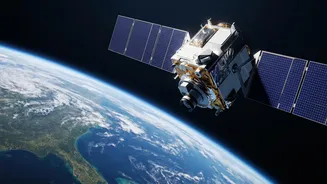

A Textbook Launch
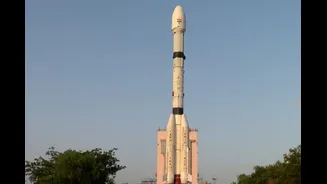
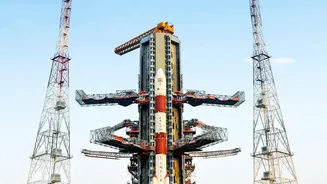
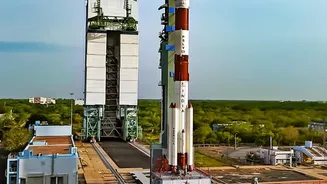
On September 4, 2026, at 2:55 AM, the Indian Space Research Organisation's (ISRO) Geosynchronous Satellite Launch Vehicle (GSLV-F17) lifted off from the Satish Dhawan Space Centre in Sriharikota. The 51.7-metre-tall rocket performed flawlessly, and about
18 minutes after launch, it successfully placed the 2,367 kg EOS-05 satellite into its intended sub-geosynchronous transfer orbit. This launch was not only ISRO's first successful mission of 2026 but also a significant confidence boost for the GSLV rocket, which once had a troubled history earning it the nickname "Naughty Boy." This success demonstrates the maturity and reliability of the indigenous cryogenic engine technology used in the GSLV's upper stage.
What is EOS-05?
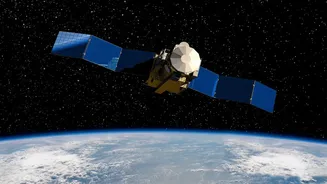
EOS-05 is a sophisticated Earth Observation Satellite, but with a crucial difference. It is India's first imaging satellite designed to operate from a geosynchronous orbit, approximately 36,000 km above the Earth. Most Earth observation satellites, like those in the Cartosat series, are in Low Earth Orbit (LEO), which means they circle the planet and can only view a specific location at periodic intervals. In contrast, a satellite in geosynchronous orbit matches the Earth's rotation, allowing it to stay seemingly stationary over one large geographical area. This enables EOS-05 to provide near-continuous monitoring of the entire Indian subcontinent.
A Constant Watcher with a Critical Job
The unique orbit of EOS-05 translates into game-changing capabilities. The satellite is equipped with advanced multi-band and hyperspectral sensors, including a high-resolution telescope. This allows it to image the entire Indian landmass roughly every 30 minutes and focus on specific areas of interest for rapid scans every five minutes. This 'persistent coverage' is invaluable for a wide range of applications. It can provide near-real-time tracking of rapidly developing weather events like cyclones and cloudbursts, monitor the spread of forest fires and floods, and assess agricultural health on a large scale. This capability drastically reduces warning and reaction times for disaster management agencies.
Strategic Importance and What Comes Next
Beyond its civilian applications in disaster management and agriculture, EOS-05 is also considered a strategic asset. Its ability to continuously monitor the Indian subcontinent and surrounding maritime regions enhances situational awareness for security purposes. The launch successfully placed EOS-05 into a transfer orbit. Over the next several days, ISRO scientists will perform a series of complex orbit-raising maneuvers using the satellite's own onboard propulsion system. These maneuvers will carefully guide EOS-05 to its final designated slot in the geosynchronous arc. Once positioned and calibrated, the satellite will begin its operational mission, providing a steady stream of data for an expected lifespan of nine years, serving as India's watchful eye from the sky.