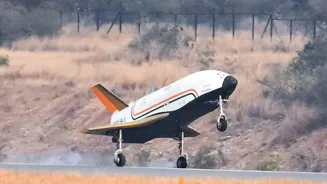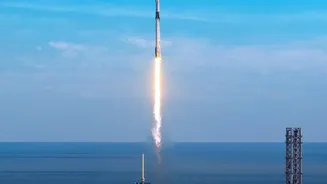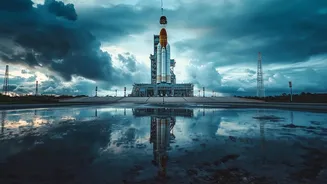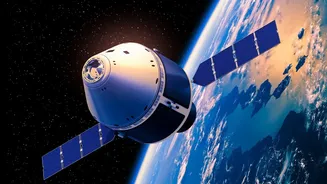






A Quick Refresher: What Is Gaganyaan?
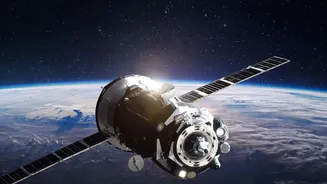
At its heart, Gaganyaan, which means "celestial vehicle" in Sanskrit, is India's ambitious mission to become the fourth country in the world to independently send humans into space. The project, spearheaded by the Indian Space Research Organisation (ISRO),
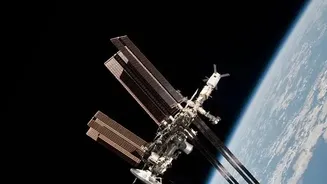
aims to launch a crew of three astronauts into a Low Earth Orbit of about 400 kilometres. They would spend several days circling the Earth before returning for a safe splashdown in Indian waters. This programme is not just about a single flight; it’s about demonstrating a homegrown capability that has so far been mastered only by Russia, the United States, and China. The successful completion of this mission will cement India's status as a major spacefaring nation.
The First Hurdle: Testing the Escape Plan
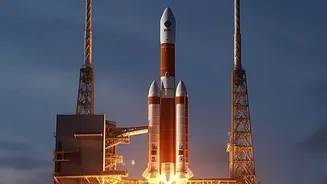
Before astronauts can strap into the capsule, ISRO must prove that they can be kept safe, especially during the most dangerous phase of any mission: the launch. The first key uncrewed flight test, known as the Test Vehicle Abort Mission (TV-D1), is designed to do exactly that. Its primary purpose is to validate the Crew Escape System (CES). Think of the CES as a highly advanced ejection seat for the entire astronaut capsule. If the rocket malfunctions or veers off course during ascent, the CES is designed to fire powerful, fast-acting motors that pull the crew module away from the failing booster at incredible speed, carrying the astronauts to a safe distance before deploying parachutes for a landing.
Why This Test Is So Critical
Sending satellites into space is one thing; making a rocket 'human-rated' is another challenge entirely. The margin for error is zero when lives are at stake. A successful test of the Crew Escape System is arguably the single most important safety validation in the entire Gaganyaan programme. This test simulates a worst-case scenario—an in-flight abort during the period of maximum aerodynamic pressure on the rocket. By proving the escape system works under these stressful conditions, ISRO gains the confidence and the critical data needed to proceed with further flights. A failure would mean a significant setback, but a success provides the green light for the subsequent phases of the mission, demonstrating an unwavering commitment to astronaut safety.
Joining an Elite Global Club
The significance of the Gaganyaan programme extends far beyond science and technology; it's a matter of national prestige and geopolitical standing. Successfully developing and testing a crew escape system is a feat only a handful of nations have achieved. When an Indian crew eventually launches from Indian soil, it will be a powerful statement of the country's technological self-reliance and ambition. This capability not only inspires national pride but also opens doors for greater international collaboration, enhances India's role in global space governance, and positions it as a key player in the future space economy. It’s a transition from being a consumer of space services to a provider and a partner.
The Road Ahead for Gaganyaan
This test flight is just the beginning of a series of rigorous trials. After the abort system is qualified, ISRO has planned several more uncrewed missions. One of these will involve sending 'Vyommitra', a humanoid robot, into orbit to test the spacecraft's life support and environmental control systems, ensuring the cabin is perfectly safe for humans. These flights will validate the performance of the orbital module, its re-entry capabilities, and recovery procedures. Only after every system has been tested, re-tested, and perfected will the four astronaut-designates, all decorated Indian Air Force test pilots, prepare for their historic crewed flight, currently anticipated for 2027.