



Bengaluru at the Centre of Space Operations
From April 8-10, 2026, Bengaluru became a global hub for space experts, hosting the second International Conference on Spacecraft Mission Operations (SMOPS-2026). Jointly organised by the Indian Space Research Organisation (ISRO), the Astronautical Society
of India (ASI), and the International Academy of Astronautics (IAA), the event brought together space agencies, private companies, and academia. The theme, "Innovative Operations for Smart and Sustainable Space Mission Management," signals a clear focus: as space gets more complex, the ground-based work of managing missions is more important than ever. Discussions centred on automation, AI, cybersecurity, and managing large satellite constellations.
The Hidden Dangers of Orbit
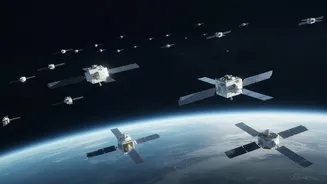
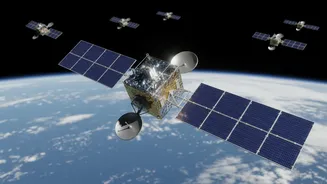
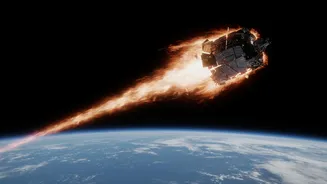
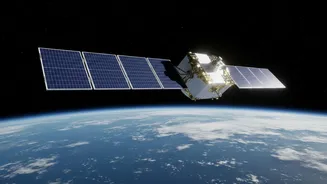
Orbiting Earth is not a calm, empty void. It's an increasingly congested highway. There are currently over 10,000 active satellites, but they share their space with hundreds of thousands of pieces of trackable debris and millions of smaller, untraceable fragments. This "space junk" consists of everything from defunct satellites and spent rocket stages to tiny flecks of paint. Travelling at speeds of up to 28,000 km/h, even a marble-sized object can cause catastrophic damage to a multi-crore satellite, threatening services we rely on daily, like GPS, weather forecasting, and internet connectivity. In 2021 alone, ISRO monitored over 4,300 close approaches to its low-Earth orbit assets. The threat of collision is constant and growing.
What is the 'Ground Segment'?
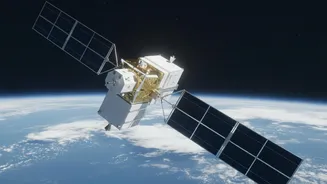
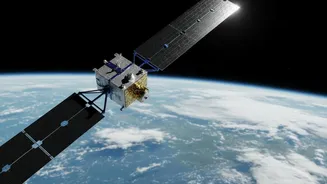
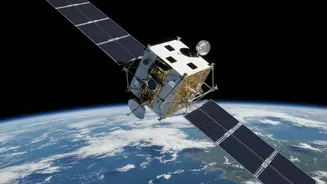
The unsung hero in this story is the 'ground segment'. This refers to the entire Earth-based infrastructure responsible for managing a space mission after launch. It includes mission control centres that plan manoeuvres, ground stations that send commands and receive data, and data centres that process and store vital information. Teams at facilities like ISRO's Telemetry, Tracking and Command Network (ISTRAC) in Bengaluru work around the clock. Their jobs involve not just communicating with satellites but also precisely tracking them, adjusting their orbits to avoid collisions, managing their power and fuel, and ensuring their onboard instruments are working perfectly. This work is the backbone of every single space mission, from Chandrayaan to commercial communication satellites.
India's Push for Space Situational Awareness
Recognising the escalating risks, India has been systematically boosting its capabilities in Space Situational Awareness (SSA). SSA is the comprehensive knowledge of the space environment, allowing operators to track objects and predict potential collisions. ISRO has established a dedicated Directorate of Space Situational Awareness and Management (DSSAM) and a control centre in Bengaluru to safeguard its assets. A key initiative under this is Project NETRA (Network for Space Object Tracking and Analysis), which is setting up a network of radars and optical telescopes to track debris and reduce reliance on foreign agencies like NORAD. This homegrown capability, now part of the ISRO System for Safe and Sustainable Space Operations Management (IS4OM), is vital for protecting India's nearly ₹50,000 crore investment in space assets and ensuring the success of ambitious future projects like Gaganyaan.
The Future of Satellite Management
The SMOPS-2026 conference highlights that the future of space depends on making operations smarter and more sustainable. Key themes included using AI and machine learning for more autonomous systems that can react to threats faster than human operators. There is also a strong focus on international cooperation, space regulations, and developing technologies for Active Debris Removal (ADR) — missions designed to capture and de-orbit large pieces of dangerous junk. For India, which is opening its space sector to private players, establishing robust operational practices is a strategic necessity. It ensures not only the safety of our own satellites but also positions India as a responsible global leader in the rapidly growing space economy.