






Putting 350kW into Perspective
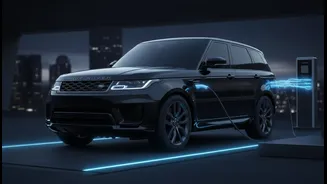
A charging speed of 350 kilowatts (kW) represents the pinnacle of current public charging technology. To understand why this is significant, consider that most home AC chargers operate between 7kW and 11kW. Many public 'fast' chargers today offer between 50kW
and 150kW. A 350kW charger has the potential to add hundreds of kilometres of range in the time it takes to grab a coffee. For the Range Rover Sport Electric, this could mean charging the battery from 10% to 80% in approximately 20 minutes under ideal conditions. This kind of speed transforms the long-distance travel experience, making it nearly as convenient as refuelling a petrol or diesel car and directly addressing one of the major hurdles for EV adoption.
The 800-Volt Advantage
The key enabling this ultra-fast charging is an 800-volt electrical architecture. Most electric vehicles on the road today use a 400-volt system. By doubling the system voltage, manufacturers can deliver the same amount of power with half the electrical current. Lower current means less heat is generated in the cables and components, which is a major limiting factor for charging speeds. This reduction in heat also allows for lighter wiring, which can help reduce the vehicle's overall weight and improve efficiency. Land Rover is joining an elite club of automakers like Porsche, Audi, Hyundai, and Lucid that have already adopted 800V systems for their premium models, signalling a clear commitment to top-tier performance.
What We Know About the Sport Electric
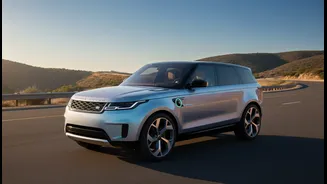
Land Rover previewed a prototype of the Range Rover Sport Electric at the Goodwood Festival of Speed on July 16, 2026. It is confirmed to share its platform, dual-motor powertrain, and a large 118.5kWh battery with the forthcoming flagship Range Rover Electric. While Land Rover has not officially confirmed the 350kW charging speed for the Sport model specifically, it is a feature of the larger Range Rover EV and is widely expected to be carried over. Power output is anticipated to be around 542 horsepower, promising to make it the most dynamic Range Rover Sport to date. However, some reports suggest its driving range might be around 480-530 km, which is modest for such a large battery and a potential weak spot against competitors.
The Competitive Landscape
The luxury electric SUV segment is becoming fiercely competitive. When the Range Rover Sport Electric arrives, it will face off against established and upcoming rivals. The Porsche Macan EV and Audi Q6 e-tron already leverage 800V platforms for fast charging. Others like the Lucid Gravity and the new BMW iX5 are setting high benchmarks for both range and charging performance. While some rivals may boast a longer range on paper, Land Rover's bet appears to be on a blend of its signature luxury, off-road capability, and a rapid, convenient charging experience to maintain its premium positioning. The ability to deliver a near-full charge in under 30 minutes is a powerful differentiator.
Is India Ready for 350kW Charging?
For Indian buyers, the prospect of 350kW charging is exciting but also raises questions about infrastructure. While the EV charging network in India is expanding rapidly, ultra-fast chargers capable of 350kW are still rare. Companies like Audi, Kia, Tata Power, and Delta have begun deploying chargers rated at 180kW, 240kW, and even higher, but they are primarily located in major metropolitan areas and along key highways. For instance, Audi, in collaboration with ChargeZone, operates a 450kW capable hub in Mumbai. While a Range Rover Sport Electric owner might not find a 350kW charger at every corner, the car's 800V system is future-proof. As the infrastructure grows—and manufacturers like Delta are producing 350kW units in India—the vehicle will be ready to take full advantage.