



The Grand Plan: Virasat Bhi, Vikas Bhi
The renewed focus on India's railway heritage is part of the broader Amrit Bharat Station Scheme. This ambitious project aims to modernise more than 1,300 stations across the country. The philosophy driving this transformation is "Virasat Bhi, Vikas Bhi"
(Heritage and Development too), which seeks to blend world-class amenities with the preservation of local culture and architecture. For the 79 stations officially classified as heritage structures, this means a delicate balancing act: upgrading infrastructure for modern passenger needs while carefully conserving the historic character that makes these buildings unique. The goal is to transform them from mere transit points into vibrant hubs that celebrate both India's past and its future.
Howrah Junction: The Grand Dame of the East
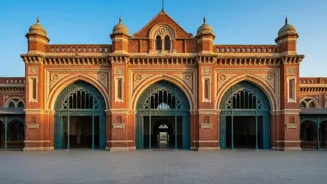
As one of India's oldest, largest, and busiest stations, Howrah Junction in Kolkata is a living monument to the age of steam. First established in 1854 with a single line, it predates most of the network it now commands. Its iconic, sprawling red-brick facade is a landmark of the city, a symbol of Victorian-era ambition and the gateway to eastern India. While the original modest structure is long gone, the current building, designed by British architect Halsey Ricardo and operational since 1905, is an architectural marvel in its own right. The station has witnessed key moments in history, including the departure of the first-ever Rajdhani Express in 1969. Its preservation is central to honouring the legacy of the railways in India.
Kalyan Junction: A Foundational Pillar
Long before it became the thirteenth busiest railway station in the world, Kalyan Junction was a crucial early step in India's railway journey. The line from Bombay (now Mumbai) was extended to 'Calian', as it was then known, on May 1, 1854, just a year after India's first-ever passenger train journey. The inaugural journey, carrying the Governor of Bombay and 250 guests, marked a significant expansion of the nascent rail network. Today, Kalyan stands as a testament to the deep-rooted history of the Indian Railways. While undergoing significant modernisation to handle its immense passenger traffic, efforts are being made to acknowledge its historical importance, with recent works even unearthing British-era wrought iron tracks.
Lucknow Charbagh: An Architectural Chessboard
Often hailed as one of India's most beautiful railway stations, Lucknow Charbagh is a palace disguised as a transport hub. Completed in 1923, it is a masterpiece of the Indo-Saracenic style, blending Mughal, Rajput, and Awadhi architectural elements with colonial engineering. Designed by J.H. Horniman, the station's layout is said to resemble a chessboard when viewed from above, with its grand domes and turrets appearing as chess pieces. Its name comes from the 'four gardens' that were once part of its forecourt. The station holds historical significance too; it was at this very station in 1916 that Mahatma Gandhi and Jawaharlal Nehru are believed to have had their first formal meeting. Its preservation under the Amrit Bharat scheme will see new blocks constructed to mirror its iconic heritage design.
Royapuram Station: The Oldest Survivor
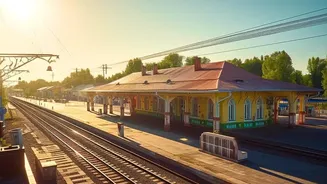
While other stations may be grander, Chennai's Royapuram station holds a special distinction: it is the oldest operating railway station in India. While the original stations at Bori Bunder and Thane no longer exist in their initial forms, Royapuram's core structure from its inauguration in 1856 survives. On July 1, 1856, the first train in South India departed from this very spot, carrying the Governor of Madras, Lord Harris. For decades, it served as the headquarters of the Madras and Southern Mahratta Railway. After years of neglect, the station has been recognised for its immense heritage value, and its preservation is a crucial link to the very dawn of railways in the southern part of the subcontinent.