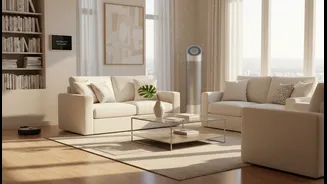




How Air Purifiers Tackle Airborne Threats
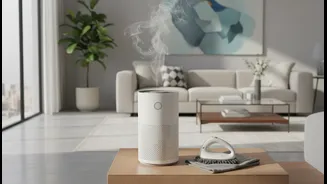
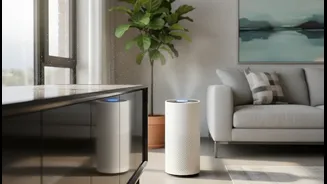
An air purifier's main job is to pull in the air from a room, pass it through a series of filters, and circulate the cleaned air back out. High-Efficiency Particulate Air (HEPA) filters are the gold standard, designed to capture 99.97% of tiny airborne
particles as small as 0.3 microns. This includes the invisible culprits that can affect your health and comfort, such as pollen, pet dander, mold spores, and the lightest dust particles that float for long periods. By continuously cycling the air, the purifier reduces the overall load of contaminants, which can significantly improve indoor air quality and lessen allergy symptoms.
The Gravity of the Situation: Why Some Dust Always Settles
The core issue lies in the simple physics of dust. Household dust is a complex mix of particles of varying sizes and weights, from microscopic skin cells to larger fabric fibers. While an air purifier is excellent at catching fine particles that remain suspended in the air for hours, it can't defy gravity. Heavier dust particles are only airborne for a short time after being disturbed. Soon, gravity pulls them down, and they settle on your floors, bookshelves, and TV screen long before they have a chance to be drawn into the purifier's intake vent.
The Limits of an Air Purifier’s Reach
Think of an air purifier like a fan; its influence is strongest in its immediate vicinity. It can only clean the air that it can pull through its filters. Dust that has already settled in a far corner, under the sofa, or on a high shelf is effectively out of its reach. While using an air purifier can reduce the rate at which new dust accumulates on surfaces, it cannot remove the dust that is already there. This is why you might run a purifier 24/7 and still find yourself writing “clean me” on a dusty tabletop.
The Cycle of Resuspended Dust
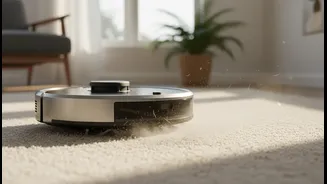
Settled dust doesn't stay put forever. Everyday activities like walking across a room, opening a door, or even the airflow from the purifier itself can kick these settled particles back into the air. This creates a continuous cycle of dust settling and becoming airborne again. While the purifier will catch some of this resuspended dust, it won't get all of it before it lands on another surface. Wiping and vacuuming are the only ways to break this cycle by physically removing the dust from the environment altogether, rather than just waiting for it to be captured from the air.
Your Complete Clean Air Strategy
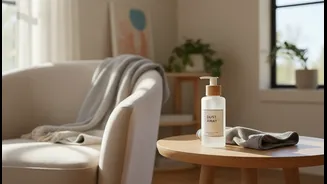
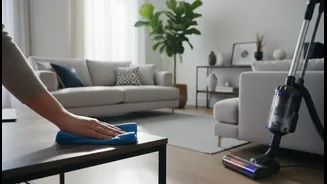
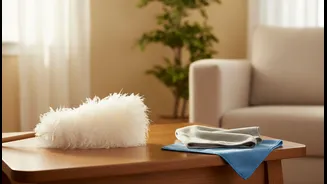
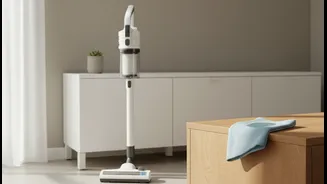
For the cleanest possible home, you need a two-pronged attack. Let your air purifier handle the airborne particles, while you tackle the settled dust with a consistent cleaning routine. Start by dusting from top to bottom, using a damp microfiber cloth that traps dust instead of just pushing it around. Follow up with a thorough vacuuming, ideally using a machine with its own HEPA filter to ensure the fine particles you kick up are captured and not just blown back into the room. This combination of technology and technique is the most effective way to manage dust.